 ▶
▶
 ▶
▶Personal Trainer + Online Coach Client System
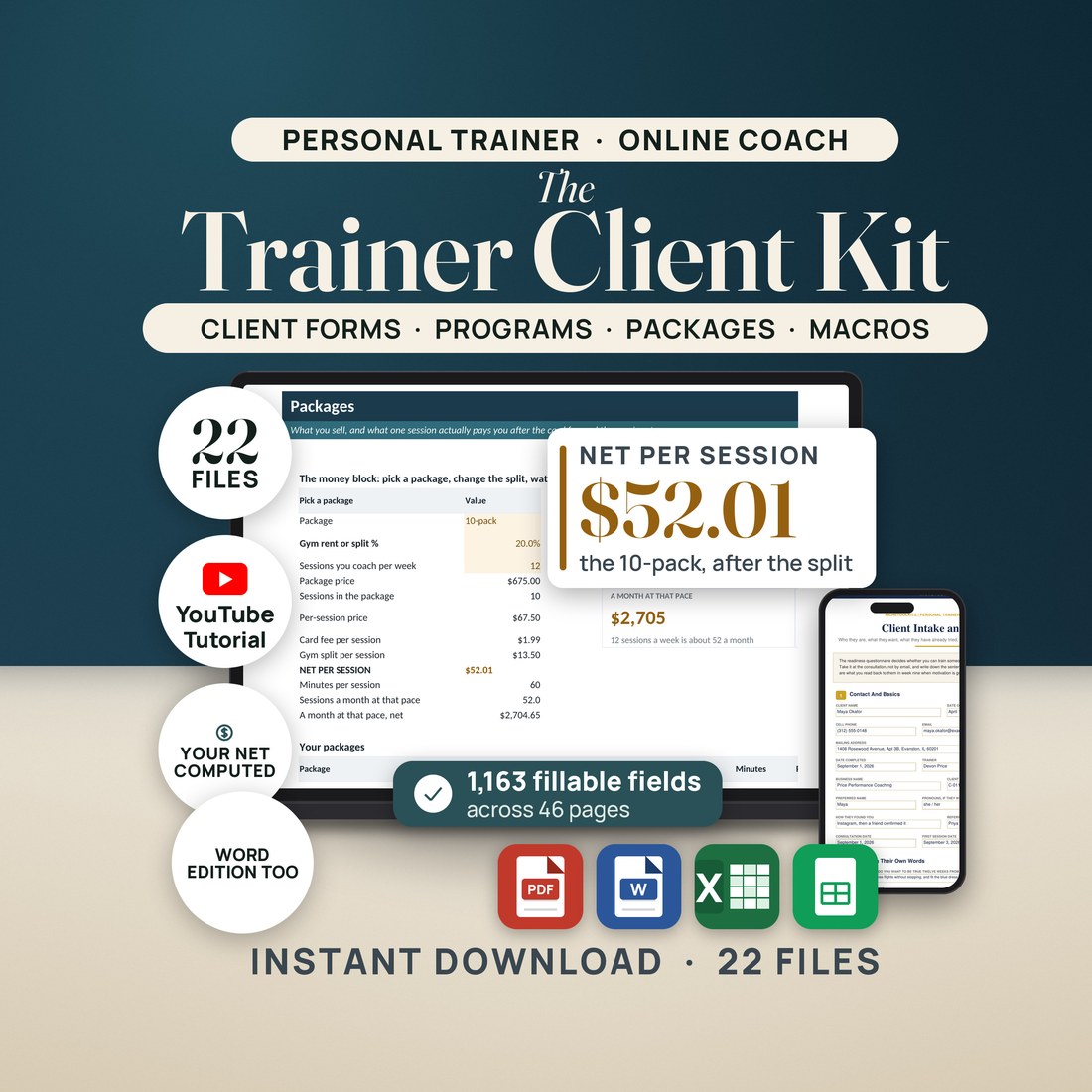
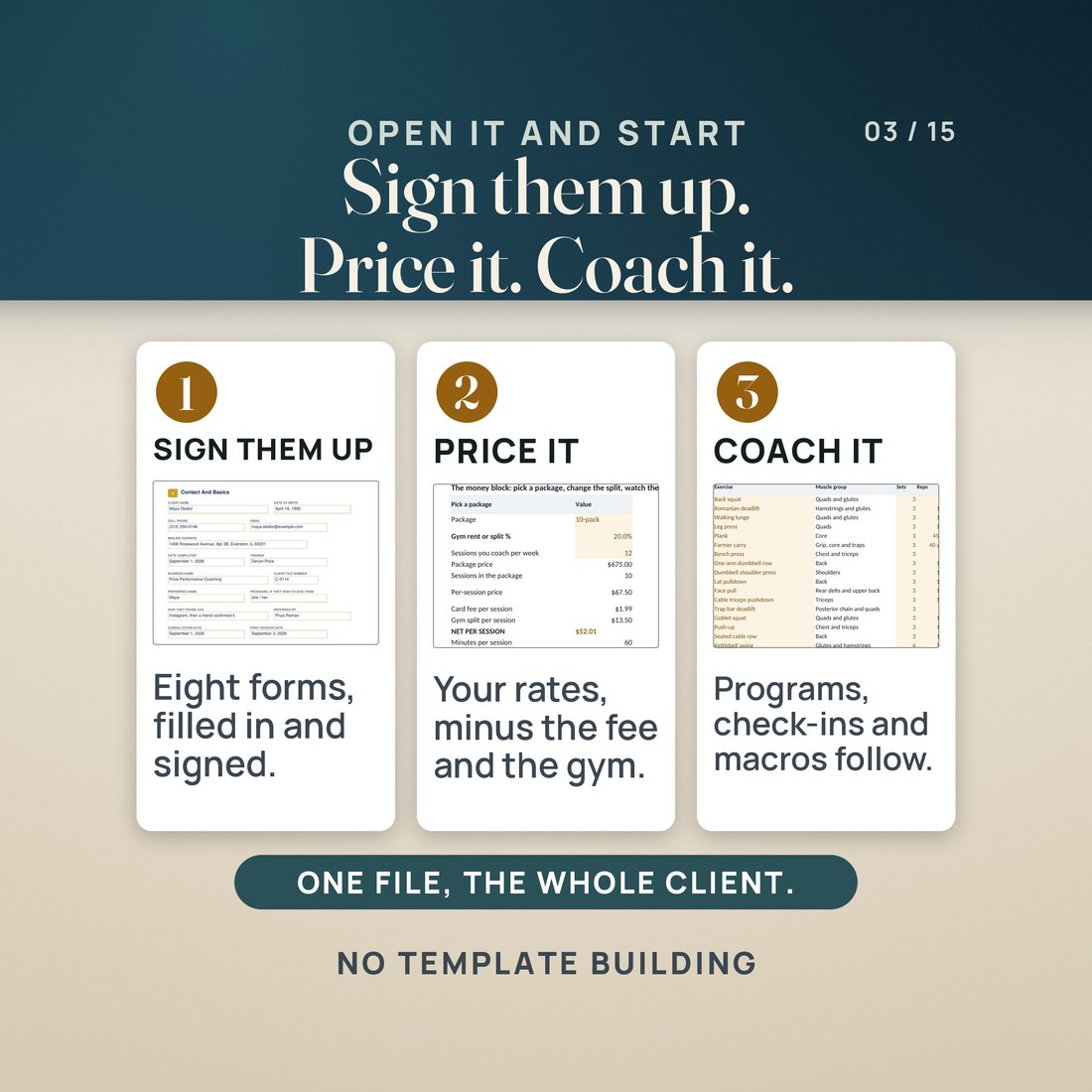
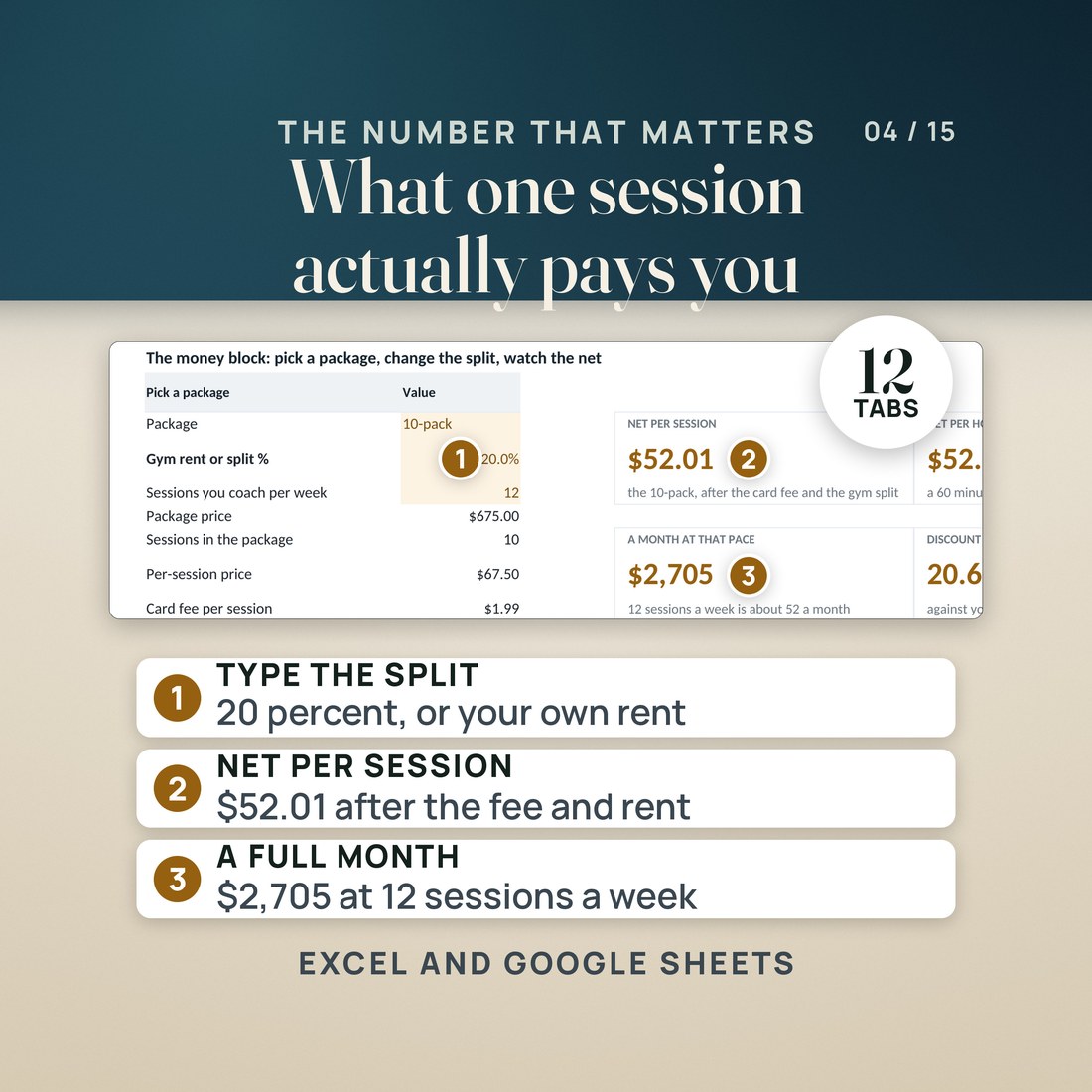
Price the 10-pack honestly: $675 is $67.50 a session and $52.01 after the card fee and a 20% gym split. Eight forms in PDF and Word, and a twelve tab workbook behind them.
You set the 10-pack at $675 because that is what the trainer down the hall charges. On the way out of the gym it feels like $67.50 a session.
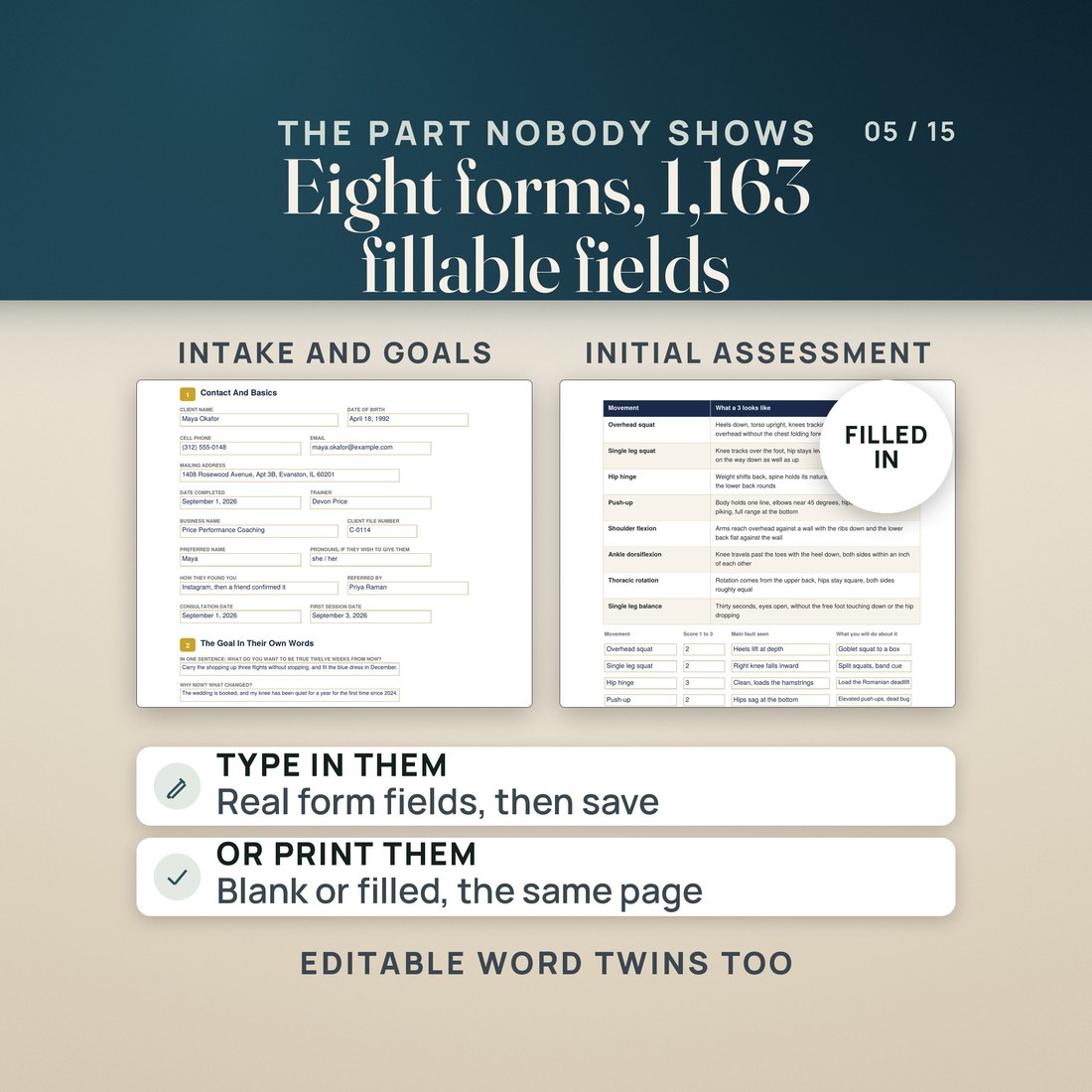
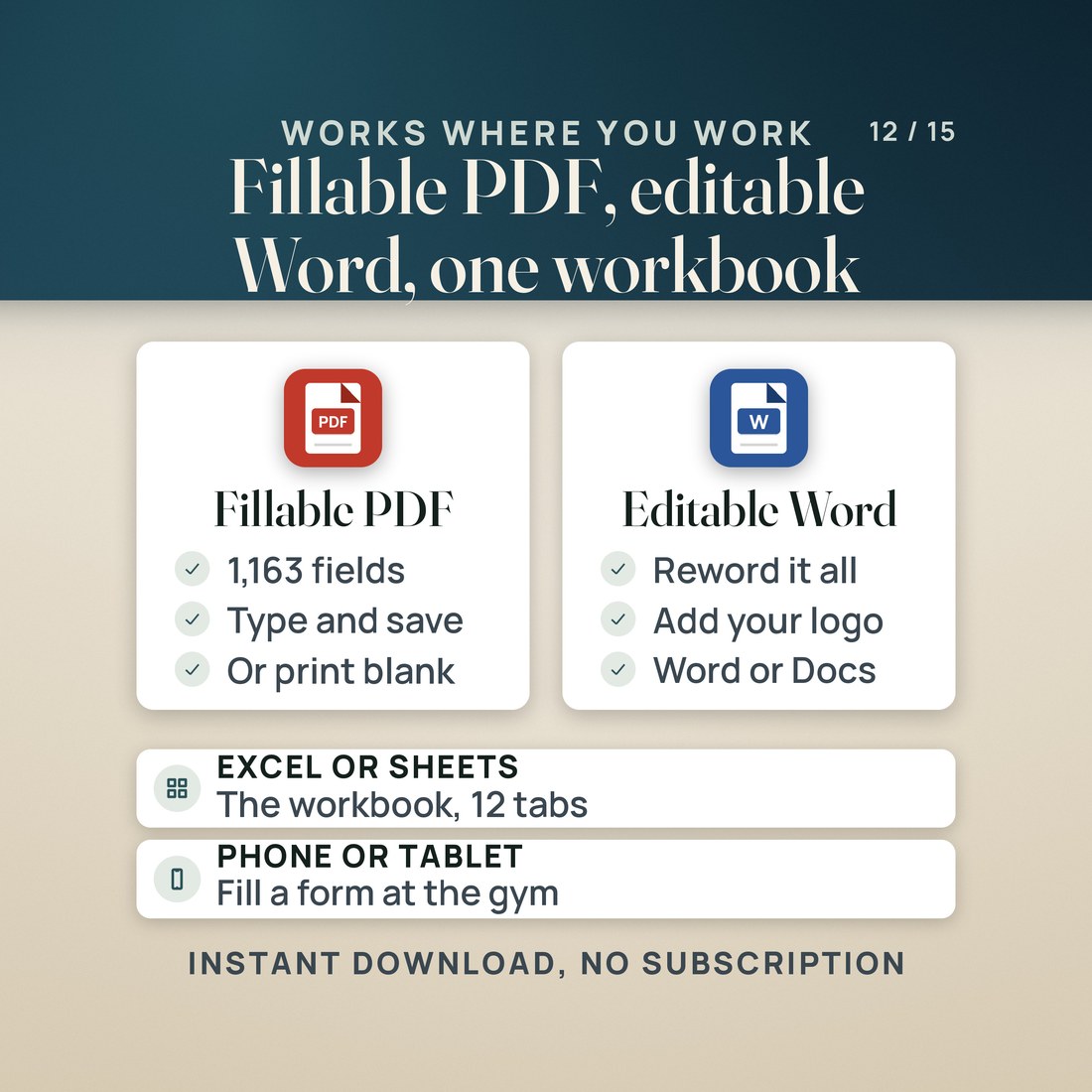
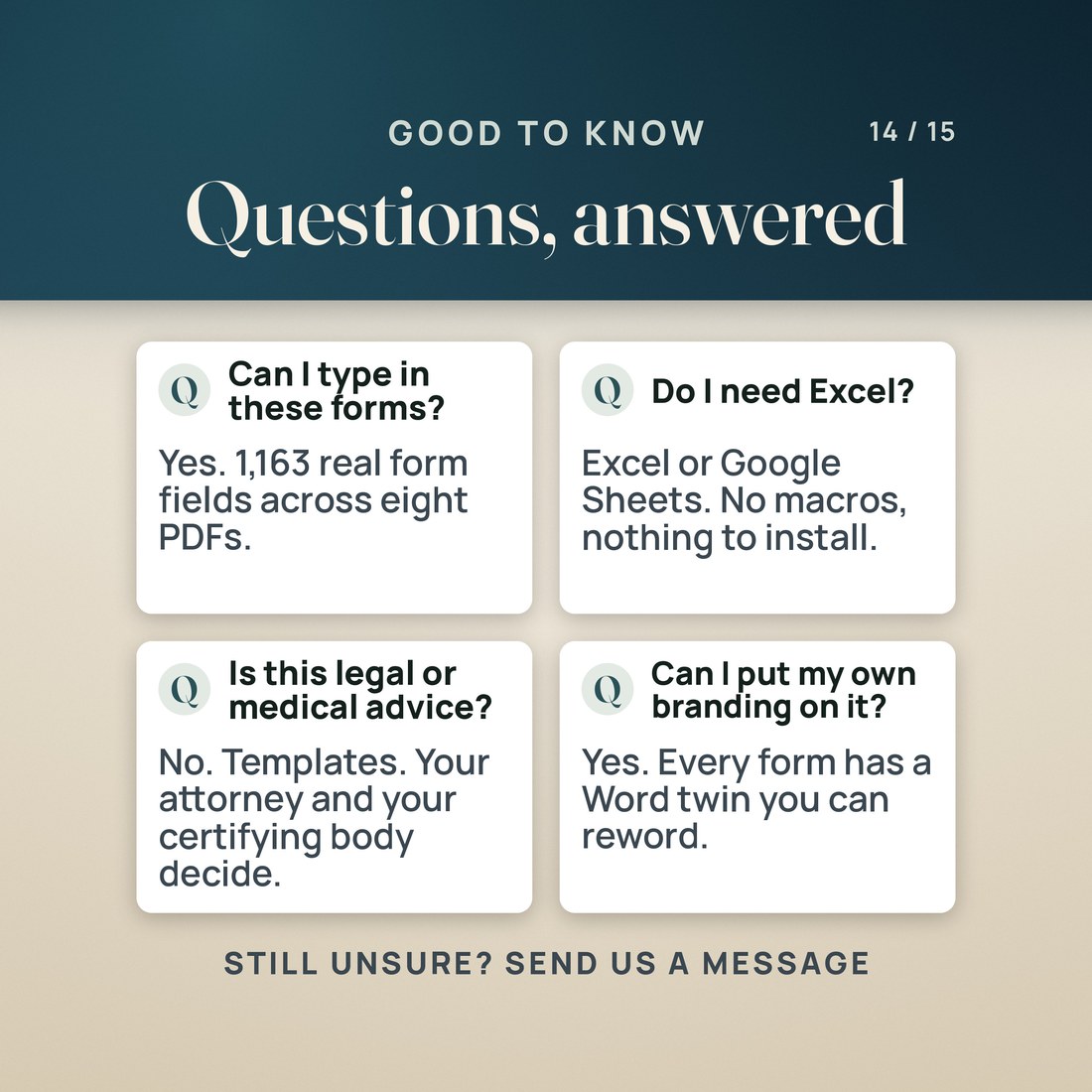
- 1,163 fillable fields across 46 pages in eight PDFs, 207 of them real check boxes. Type straight in, save, send
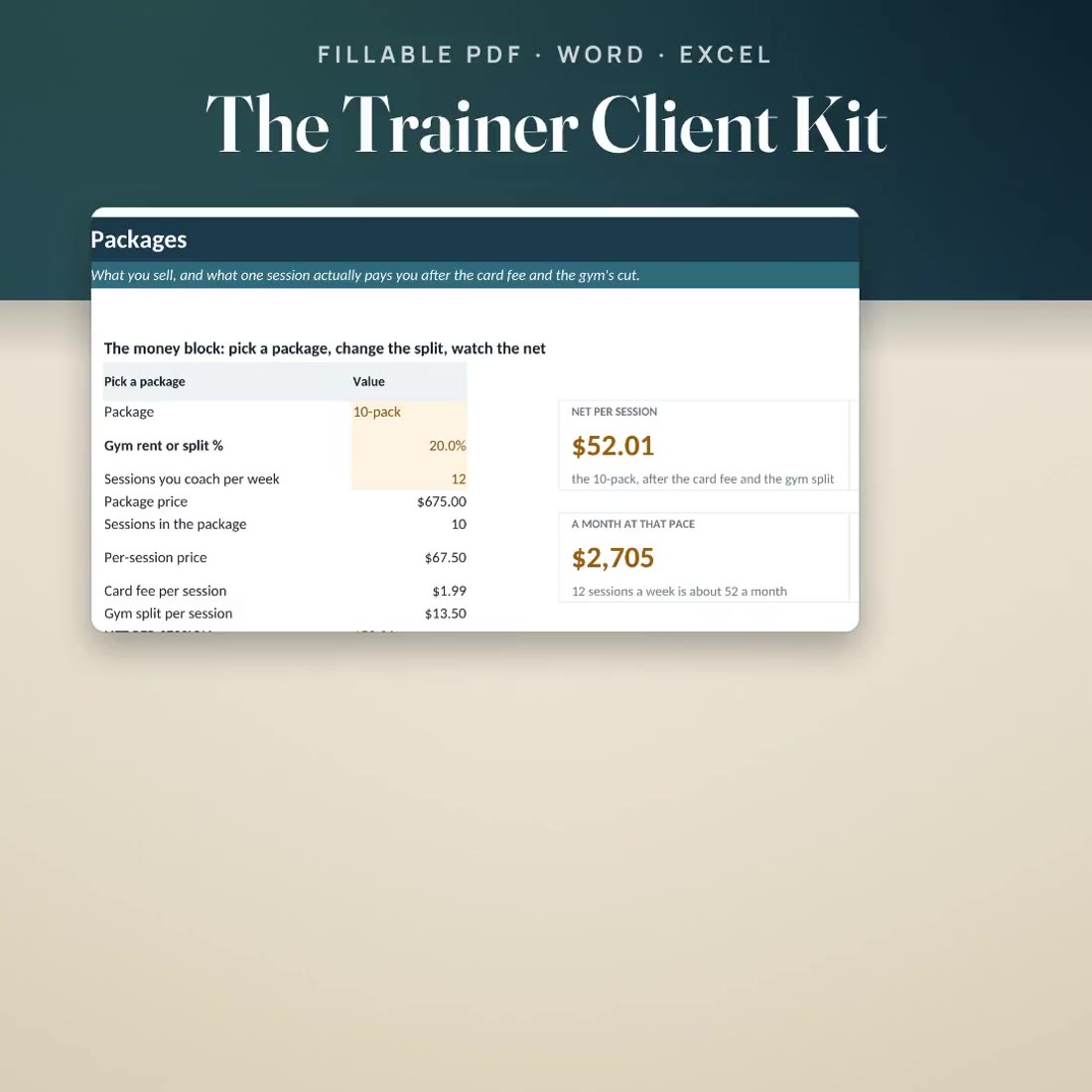
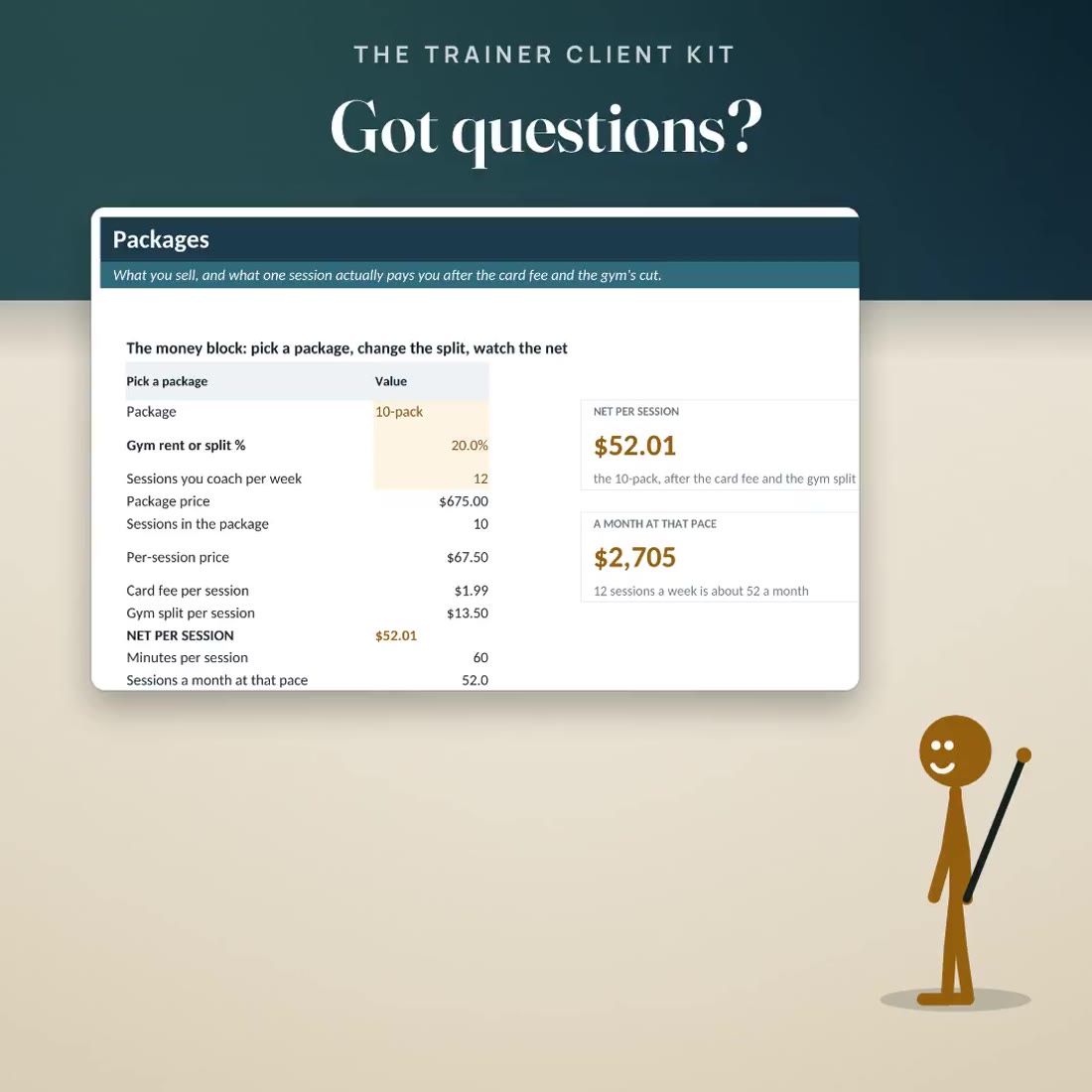
- A package builder that prices your own session honestly: the 10-pack at $675 is $67.50 a session and $52.01 after the card fee and a 20% gym split, which is $2,704.65 a month at twelve sessions a week. Type 25% into the split cell and the same pack nets $48.64, a difference of $2,106.00 a year
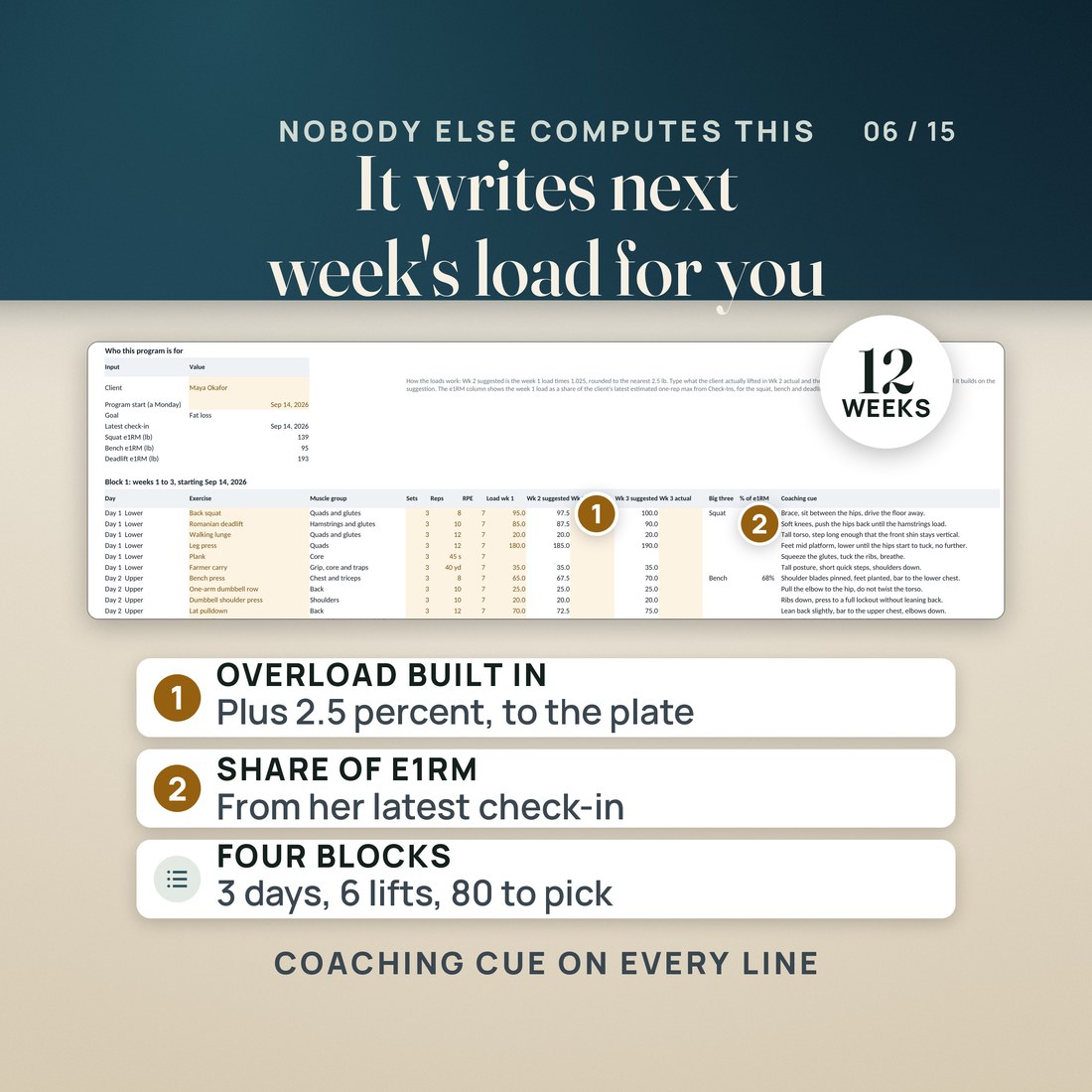
- A twelve week program builder with an 80 exercise library, four blocks of three training days and six exercises a day, that suggests next week's load at your own progressive overload percentage and shows each set as a share of the estimated one rep max
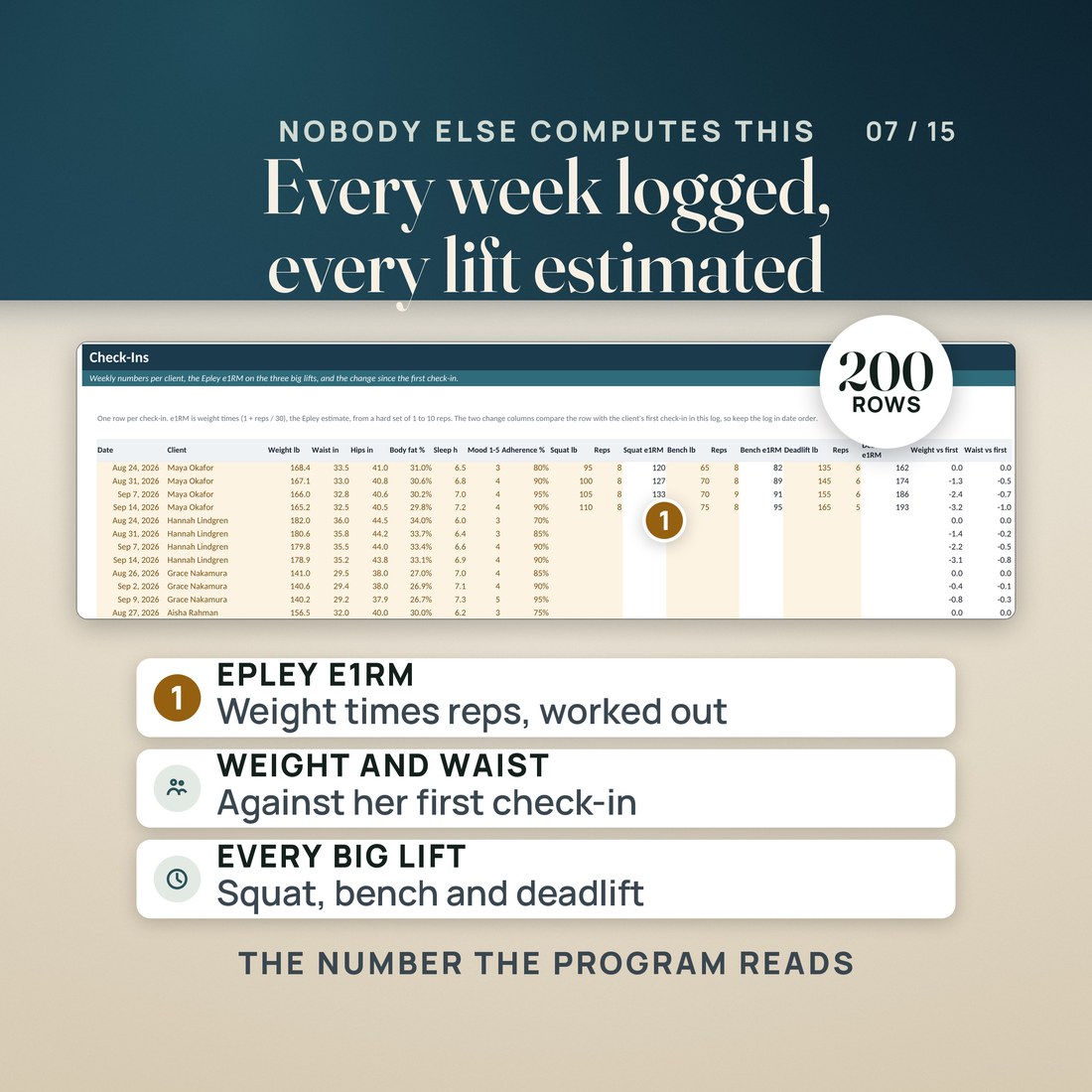
- A 200 row check-in log that turns a client's squat, bench and deadlift sets into an estimated one rep max and the change since the first check-in, beside weight, waist, hips, body fat, sleep, mood and adherence
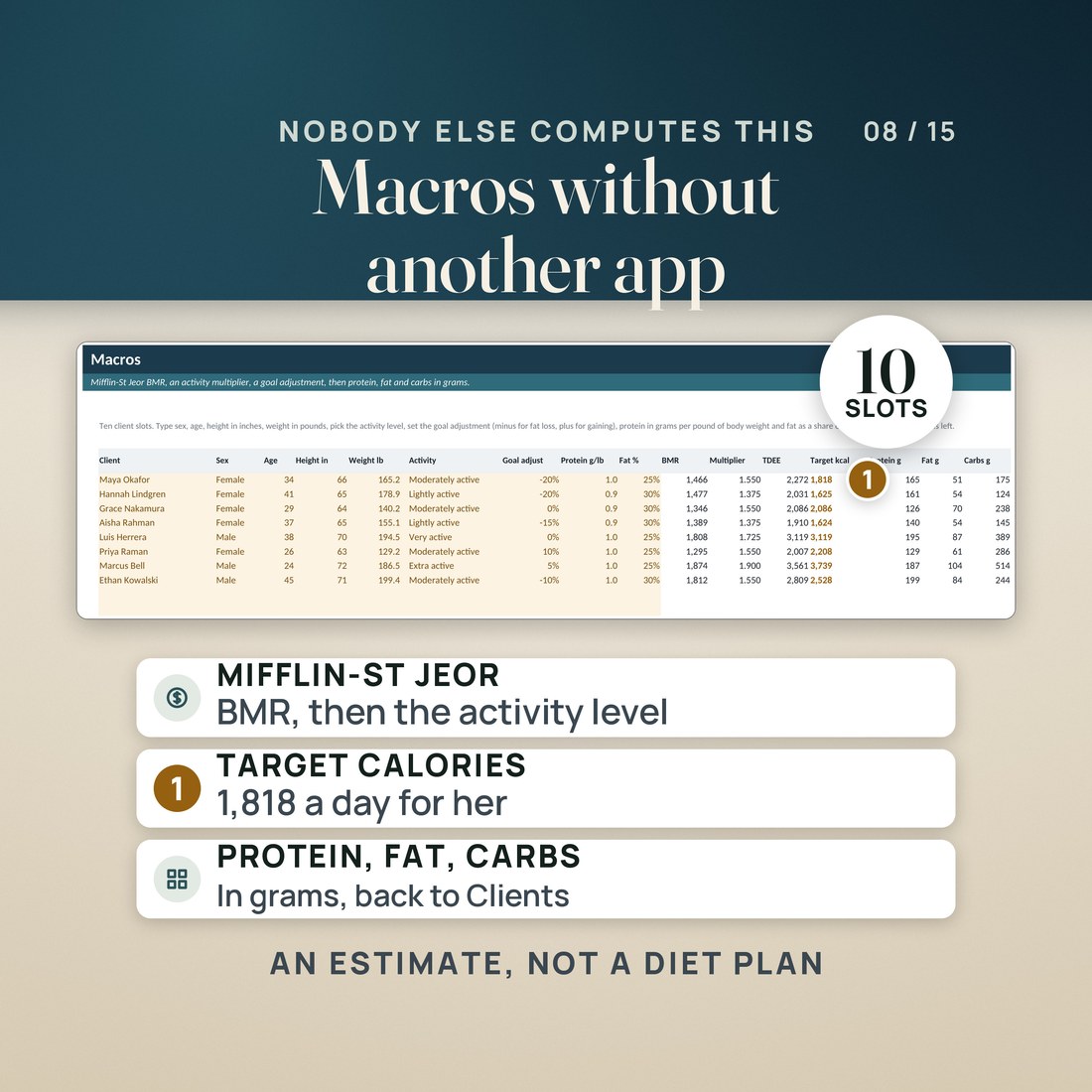
- Macro targets for 10 clients from a Mifflin-St Jeor resting burn, with the daily calorie and macro target per client
- Every one of the eight documents again as an editable Word file, for rewording and for putting your own business name on them
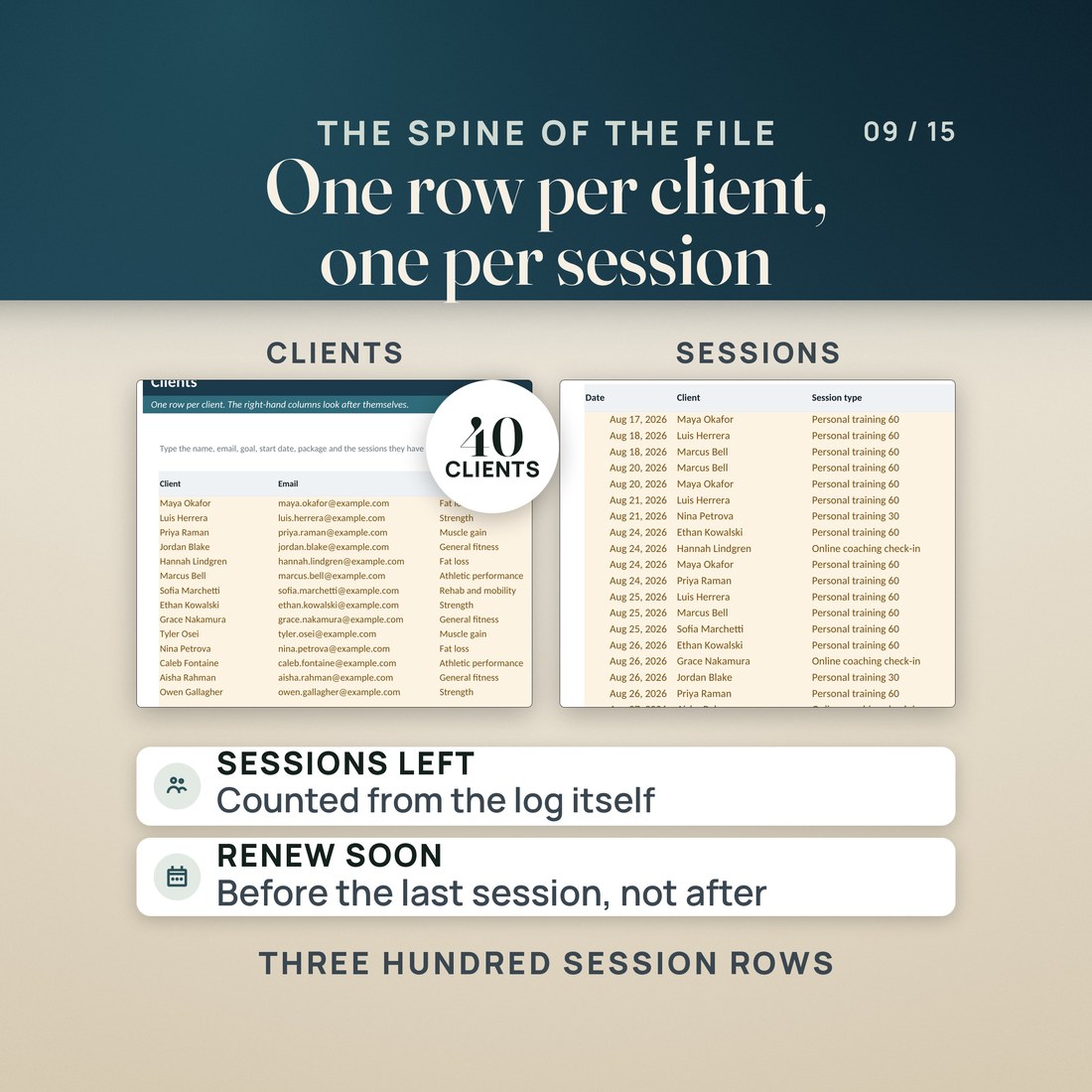
- 2,614 working formulas across twelve tabs for Excel or Google Sheets, with room for 40 clients, 300 sessions, 200 check-ins, 40 invoices and 10 macro profiles
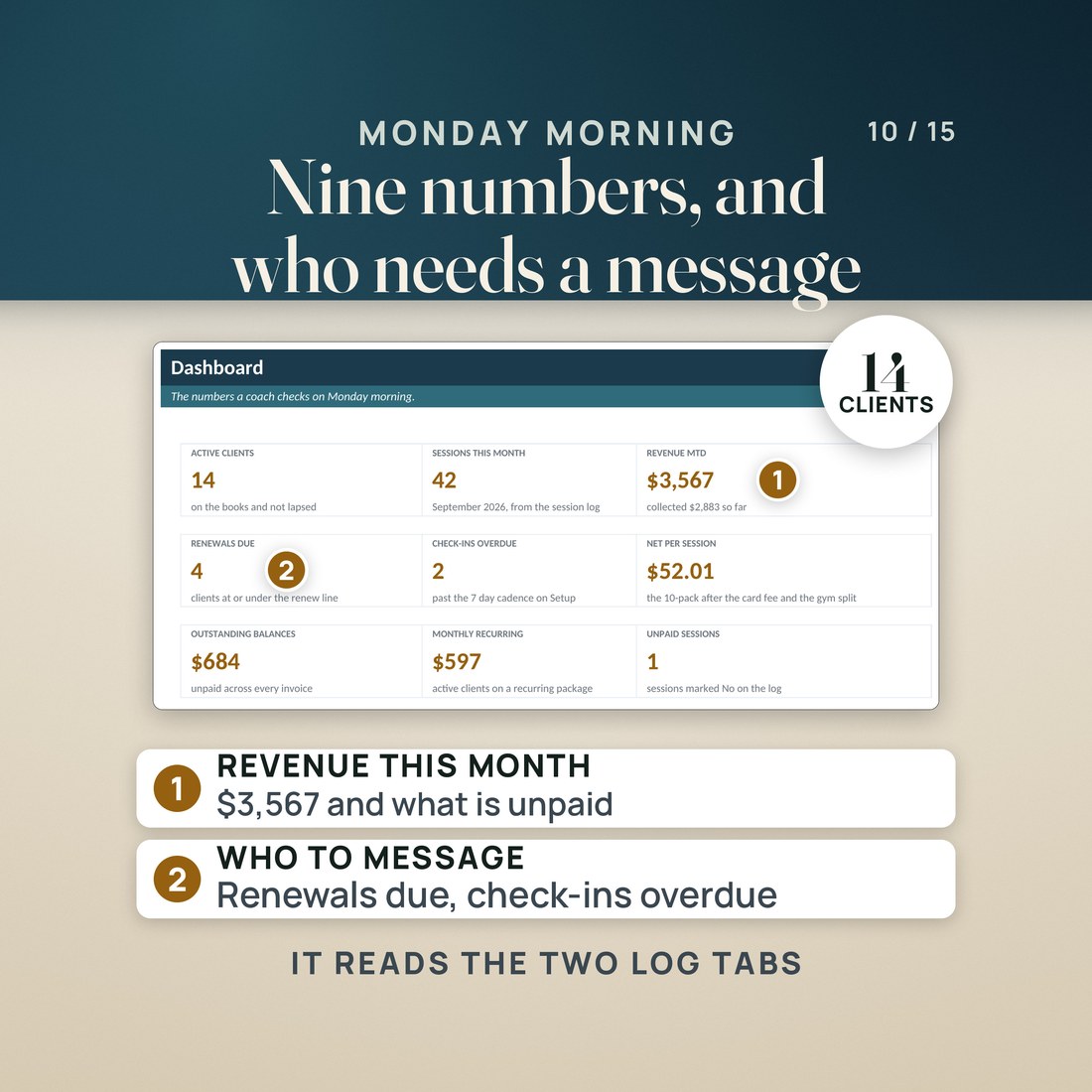
- A Dashboard of nine numbers, a five week session chart, the renewals that are due and the check-ins that are overdue
Overview
Price the 10-pack honestly: $675 is $67.50 a session and $52.01 after the card fee and a 20% gym split. Eight forms in PDF and Word, and a twelve tab workbook behind them.
You set the 10-pack at $675 because that is what the trainer down the hall charges. On the way out of the gym it feels like $67.50 a session.
Then the card processor takes 2.9% plus 30 cents, the gym takes its 20% off the top, and nobody ever writes down what is left. This workbook writes it down: $52.01 a session, and $2,704.65 a month at twelve sessions a week. Put the gym split up to 25% and it tells you that too, $48.64 a session and $2,529.15 a month, before you agree to anything.
What's Included
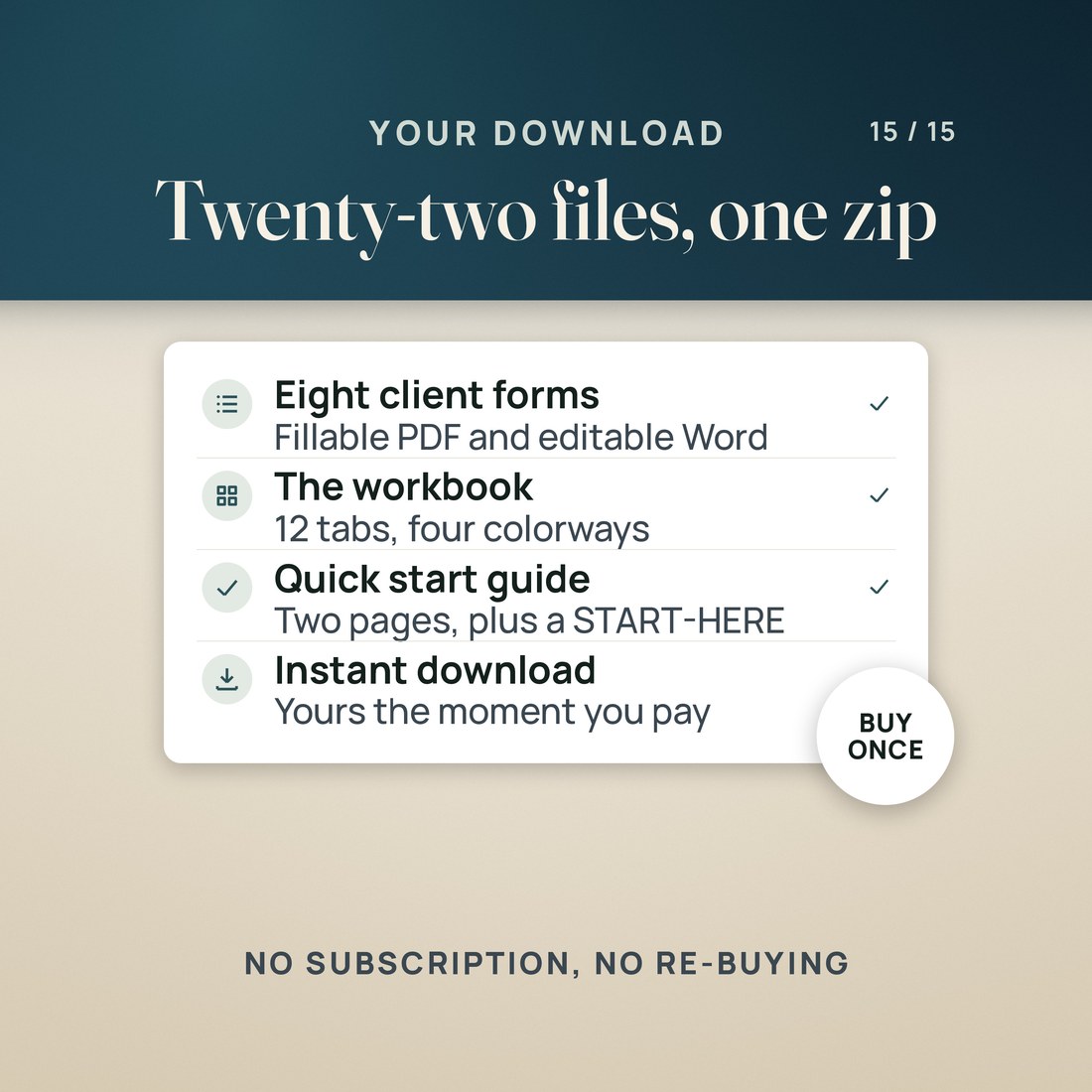
One ZIP, 22 files:
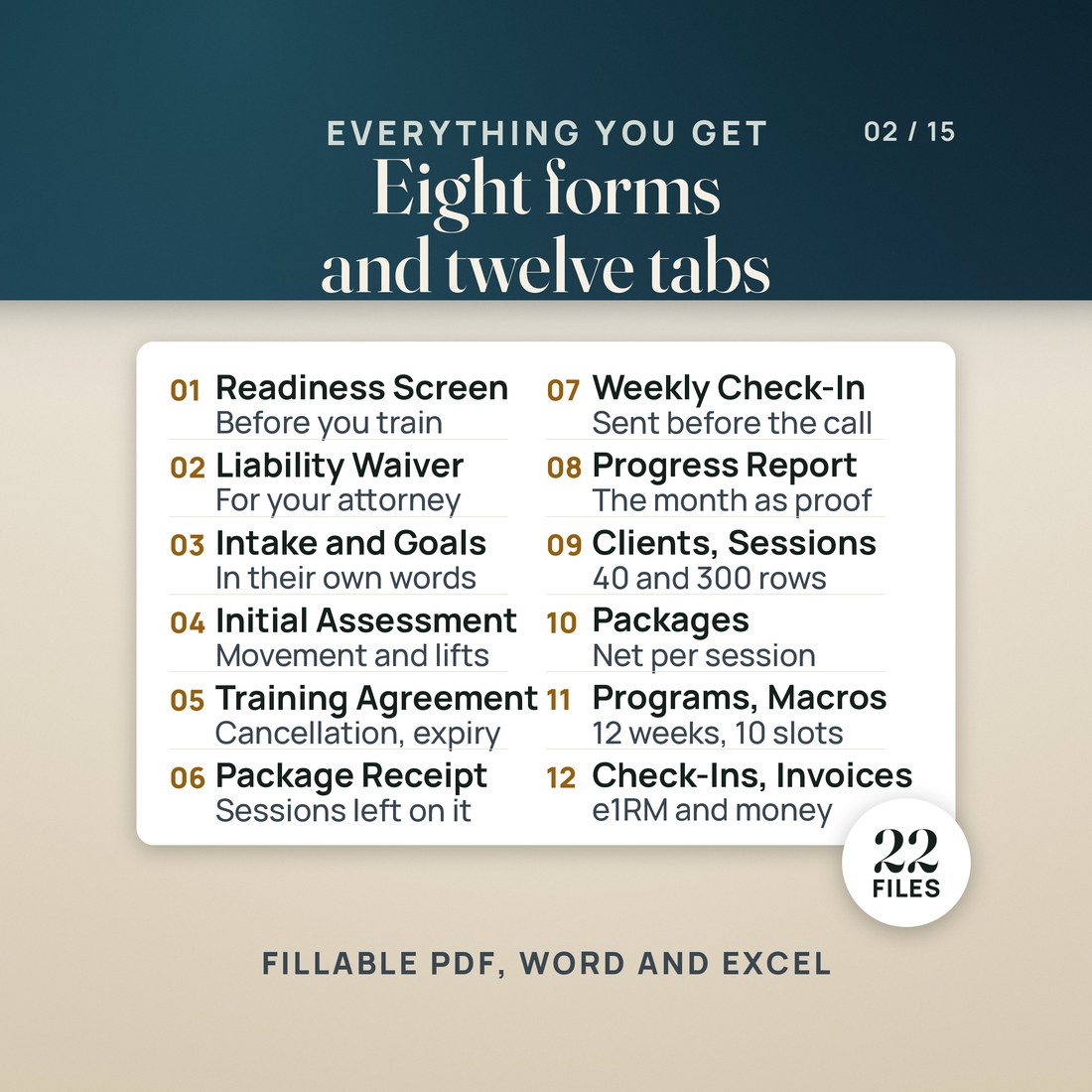
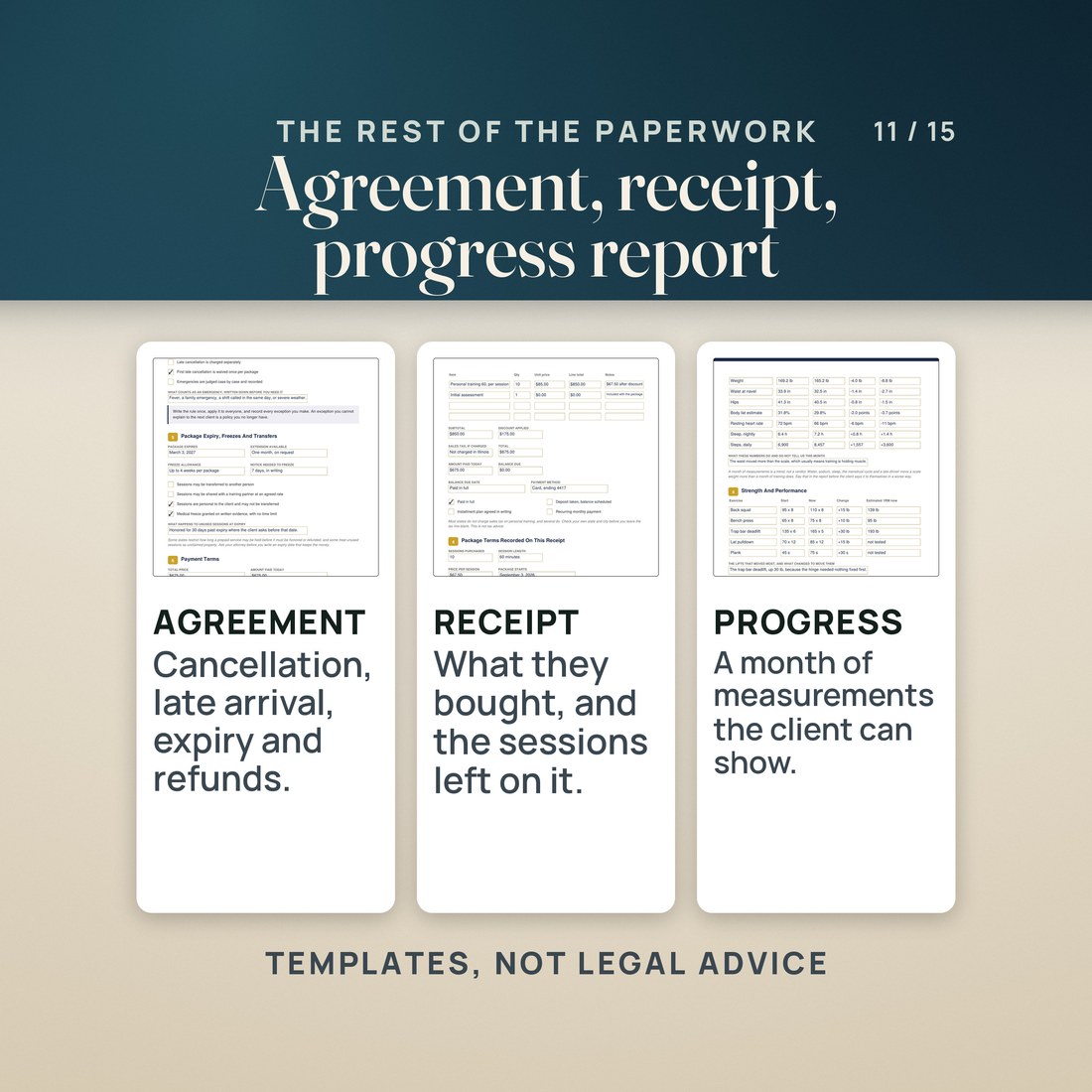
- Eight fillable PDF forms: Physical Activity Readiness Questionnaire, Liability Waiver and Release, Client Intake and Goals, Initial Assessment, Training Agreement and Policies, Package Purchase Receipt, Weekly Check-In and Monthly Progress Report
- The same eight documents again as editable Word files, for rewording them and putting your own business name on them
- The PT Client System workbook in four color editions with twelve tabs: Start Here, Setup, Clients, Packages, Sessions, Programs, Exercise Library, Check-Ins, Macros, Invoices, Dashboard and Help
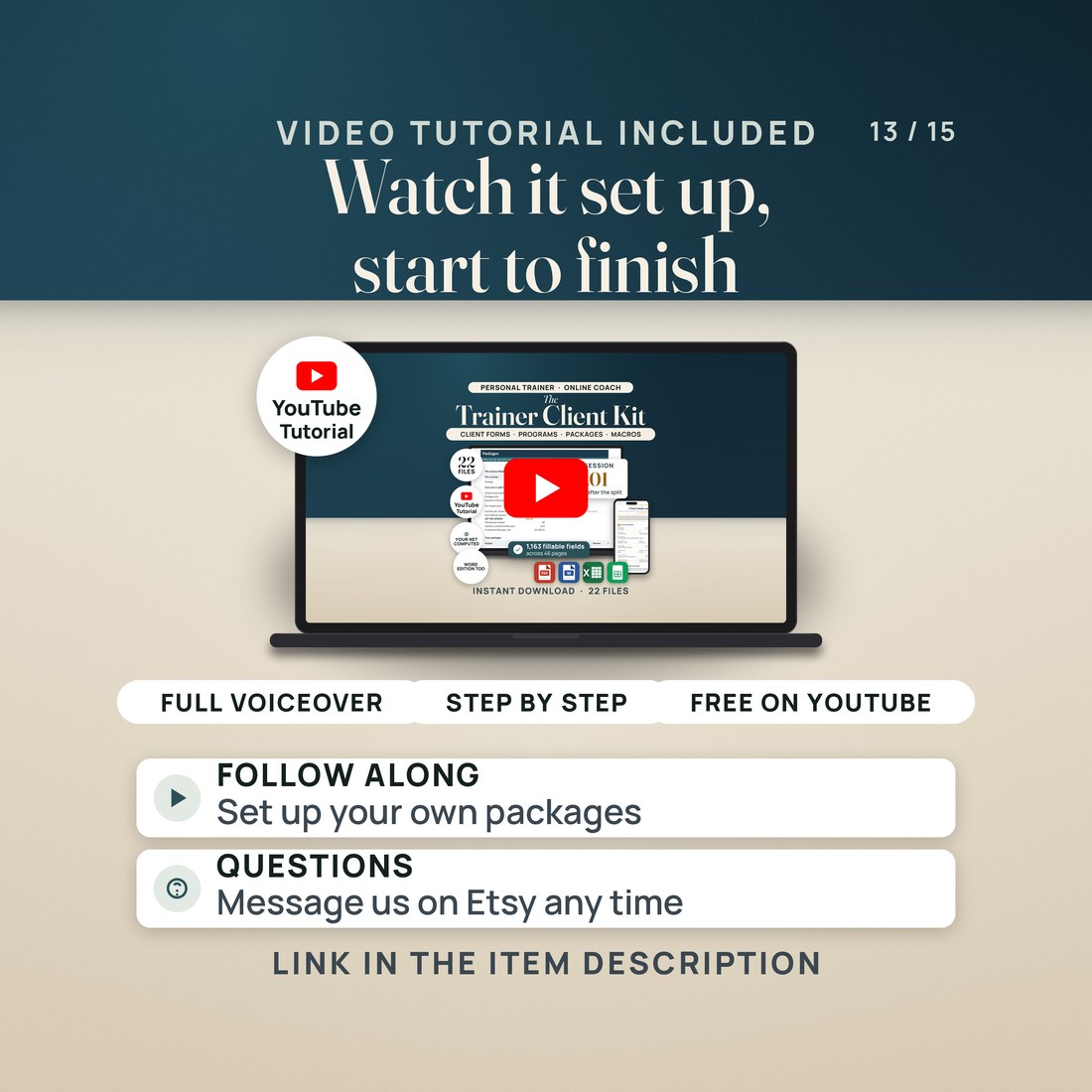
- A two page Quick-Start PDF and a START-HERE file with the first things to do, what every file is for, and the honest warnings
Key Benefits
Why this one
The 10-pack at $675 looks like $67.50 a session until the card fee and the gym split come out of it. Packages shows $52.01 net and $2,704.65 a month at your own pace, and it moves the moment you change the split, so a new gym deal gets an answer before you sign it.
Screening, waiver, intake, assessment and the training agreement, in fillable PDF for the clipboard and editable Word for your own branding. 1,163 fields across 46 pages, and the check boxes are real check boxes.
An 80 exercise library, four blocks of three training days and six exercises a day, with next week's load suggested at your own progressive overload percentage and every set shown as a share of the estimated one rep max.
The check-in log turns squat, bench and deadlift sets into an estimated one rep max by the Epley formula and shows the change since the first check-in, beside weight, waist, hips, body fat, sleep, mood and adherence. The Monthly Progress Report prints it.
The readiness form carries the structure of a health screen and not the questions, so you paste in your certifying body's current published PAR-Q+ wording and keep its copyright line. The waiver and the training agreement are drafting templates for a licensed attorney in your own state. Nothing here clears anyone to exercise.
Who It's For
Built for
- A certified personal trainer with their own clients, in a gym on a split or renting their own space, who needs the screening, the waiver, the intake and the assessment in one place and wants to know what a package really pays
- An online coach who never sees the client in the room, and needs the weekly check-in, the monthly progress report, the macro targets and the twelve week program in one file
- A trainer going independent for the first time, who has the certification and none of the paperwork
- A coach whose packages were priced off what the trainer down the hall charges, and who has never worked out what is left after the processor and the gym
How It Works
Up and running in minutes
Type into the amber cells on Setup: your hourly rate, your card fee, your gym rent or split, your check-in cadence and your session types. Then your packages and prices on Packages, and your clients on Clients.
NET PER SESSION and A MONTH AT THAT PACE answer for every package you typed. Change the split, the fee or the pace and both move, so you can price a pack before you offer it.
The readiness form, the waiver, the intake and the training agreement go out before the first session, as fillable PDFs or as Word files you have reworded and rebranded.
Log every session, build the block on Programs, take the weekly check-in, set the macros and raise the invoice. The Dashboard holds nine numbers, the renewals due and the check-ins overdue.
Why It's Different
Not another template
The shelf sells two halves of this job and never both. There are trainer form packs with no arithmetic in them, and there are session trackers with no paperwork. This is both, and the two halves know about each other: the package you price on the workbook is the package printed on the purchase receipt, and the check-in the client fills in is the row that moves the strength trend. It is also honest where the competition is not. The readiness form ships the structure of a health screen and deliberately not the questions, because the PAR-Q+ text is somebody else's copyright, and the waiver and the agreement are drafting templates with the decisions left in square brackets for your own attorney rather than contracts sold as ready to sign.
Delivery & Compatibility
Instant, and it opens in what you already use
As soon as your order is complete you get instant access to download the ZIP: eight fillable PDFs, the same eight as editable Word files, the workbook in four color editions, a two page Quick-Start PDF and a START-HERE file. Nothing ships and nothing installs.
One ZIP, instant download. The forms open in any PDF reader on a computer, phone or tablet; if a browser preview will not let you type into a field, open that PDF in Adobe Acrobat Reader instead. The Word editions open in Word 2016 or later, Pages or Google Docs. The workbook is built for Excel 2016 or later and works in Google Sheets. No macros, no add-ons, no account and no subscription.
FAQ
Questions, answered
What format is this?
Eight fillable PDF forms, the same eight again as editable Word (.docx) files, and one workbook (.xlsx) in four color editions, 22 files in all. You get a ZIP to download the moment payment clears.
What do I need to open it?
Any PDF reader for the forms, Word or Google Docs for the Word editions, and Excel or Google Sheets for the workbook, on a computer, phone or tablet. There are no macros and nothing to install. If your web browser will not let you type into a form field, open that PDF in Adobe Acrobat Reader instead.
What does the workbook compute?
Sessions used and left on every package, the next check-in date and whether a renewal is due, the net per session and net per hour after your card fee and gym split, a month's take at your own pace, next week's load at your own progressive overload percentage, an estimated one rep max from the check-in log with the change since the first check-in, a daily calorie and macro target per client, invoice totals and outstanding balances, and nine dashboard numbers.
Are the waiver and the agreement ready to sign?
No, and no honest seller would say otherwise. They are drafting templates with every decision left in square brackets for a licensed attorney in your own state, and some states will not enforce a release of ordinary negligence in a fitness setting at all.
Does it include the PAR-Q+ questions?
No. The readiness questionnaire carries the structure of a health screen, seven placeholder topic lines and a warning panel telling you to paste in your certifying body's current published wording and keep its copyright line.
Is this medical, legal or nutrition advice?
No. It is business and coaching paperwork. Nothing here screens a client for you, clears anyone to exercise, or states what your own state requires of you. The sample client, the sample trainer and every name and figure in the sample rows are invented.
This is business and coaching paperwork, not medical, legal or nutrition advice. The readiness questionnaire deliberately does not contain PAR-Q+ text. The waiver and the training agreement are drafting templates for a licensed attorney in your own state. The Word editions print the grids as bordered tables rather than typed field lines, so they are there for rewording and rebranding while the PDFs are the fillable ones. The four color editions are separate files, so a figure typed into one does not appear in the others. Sales tax is set to zero in the sample; several states and some cities do tax personal training, and nothing here is tax advice. The sample client, the sample trainer and every name, figure and address in the sample rows were invented for the example. Digital product; because the files are delivered instantly, all sales are final.