 ▶
▶
 ▶
▶Garden Planner + Seed Starting Calculator
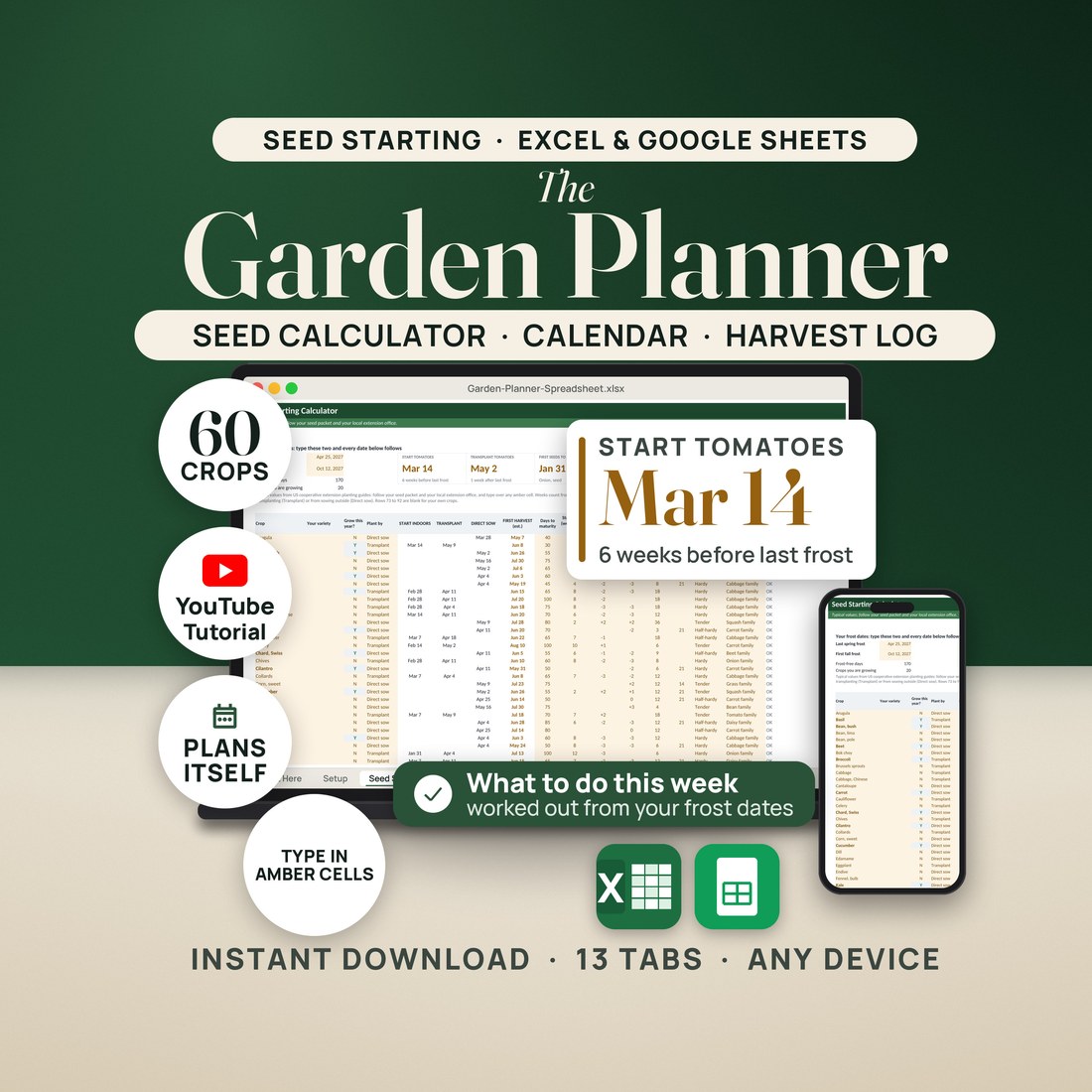
Type your last frost date once, and every seed-starting, transplant, sowing and first-harvest date for 60 crops is worked out from it.
The seed packet says to start six to eight weeks before the last frost, and the calendar on the wall does not know when that is.
- A seed-starting calculator: start indoors, transplant, direct sow and first harvest dates for every crop, worked out from your last spring frost
- A 60-crop library of 49 vegetables, 7 herbs and 4 flowers, with typical extension timings, spacing and succession intervals you can change, plus 20 blank rows
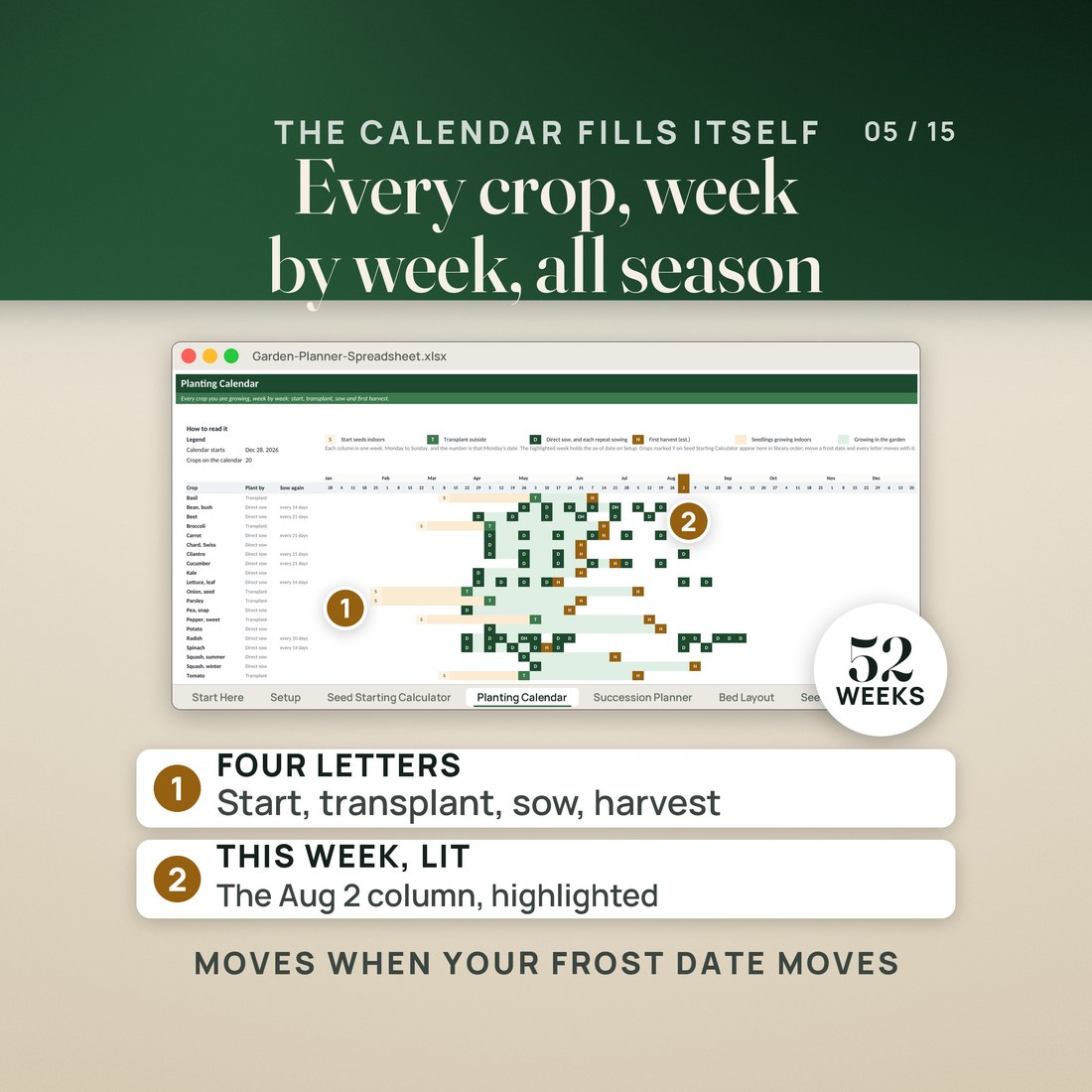
- A 52-week planting calendar whose start, transplant, sow and harvest marks move when your frost date moves
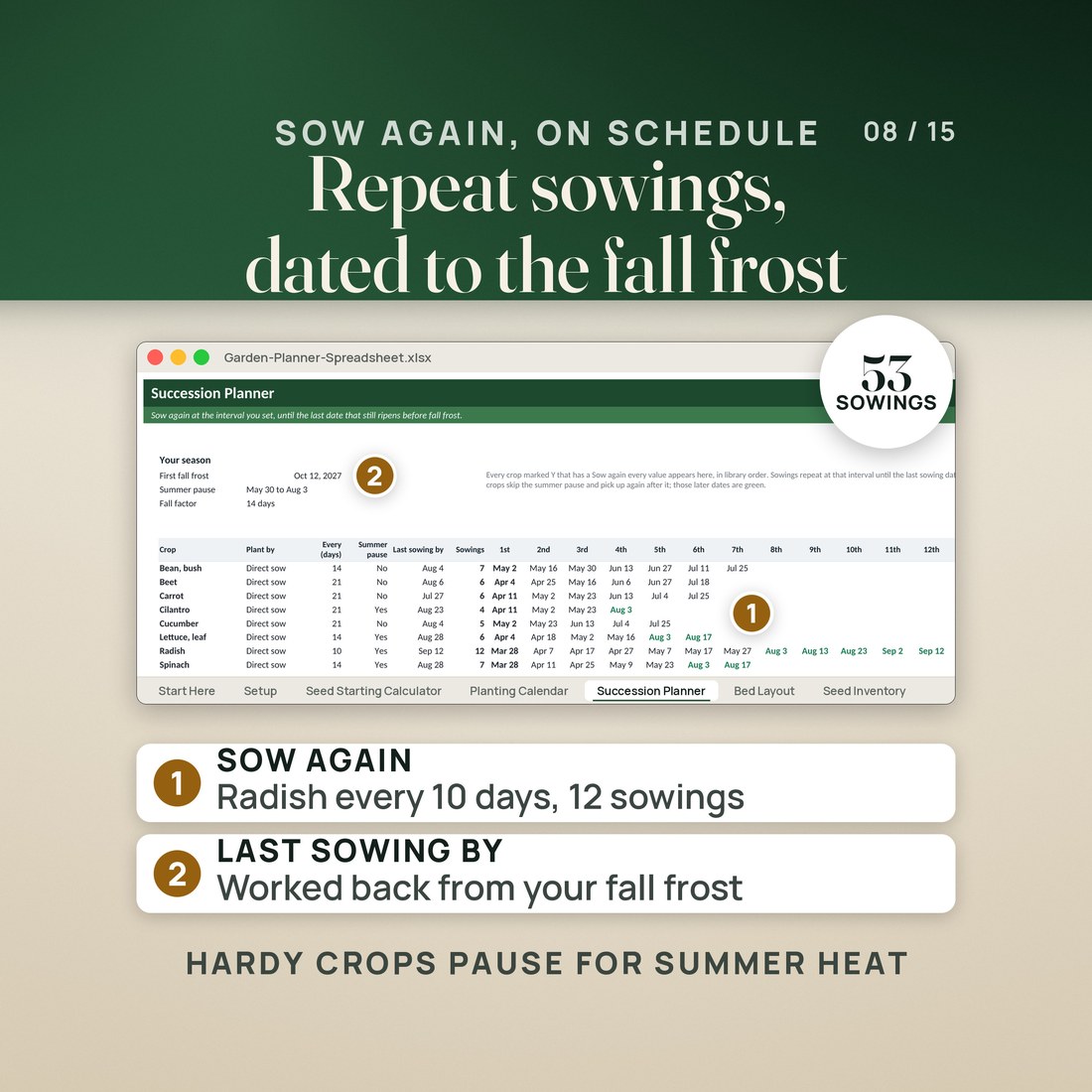
- A succession planner that schedules repeat sowings up to the last date that still ripens before your first fall frost
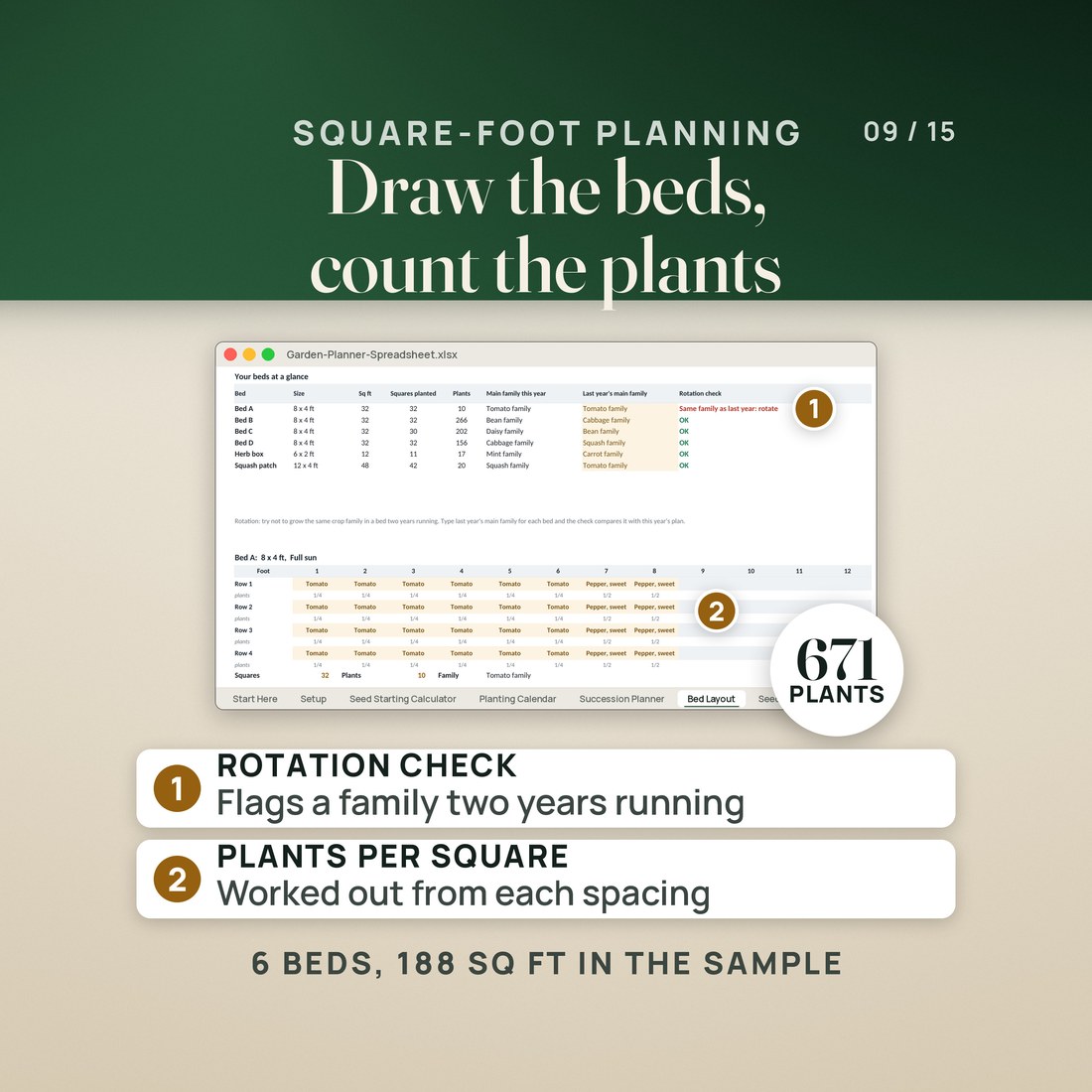
- A square-foot bed layout for up to 10 beds that counts plants per square and flags a bed in the same crop family as last year
- A harvest log valued at your prices, a costs tab, and a dashboard that sets what the garden produced against what it cost
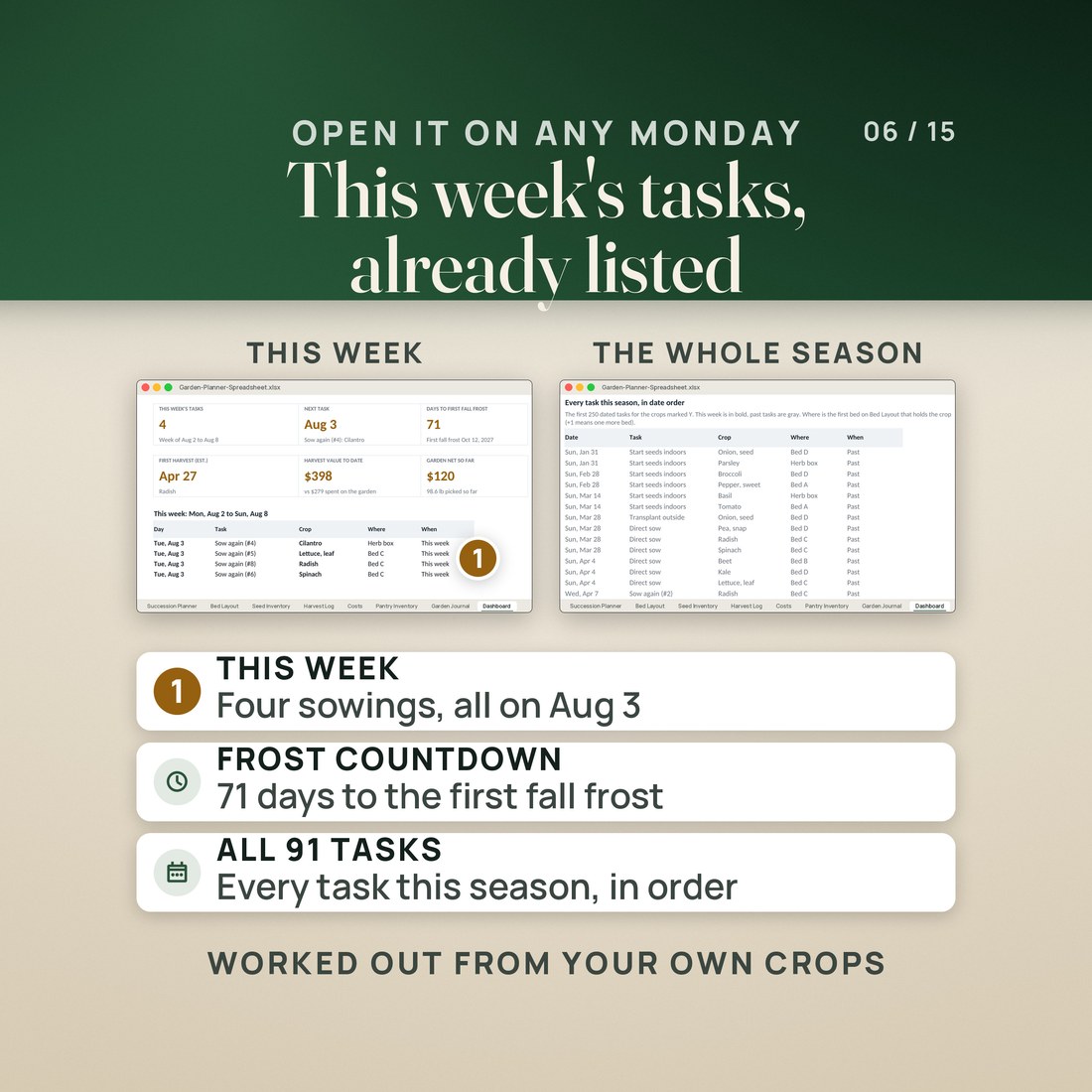
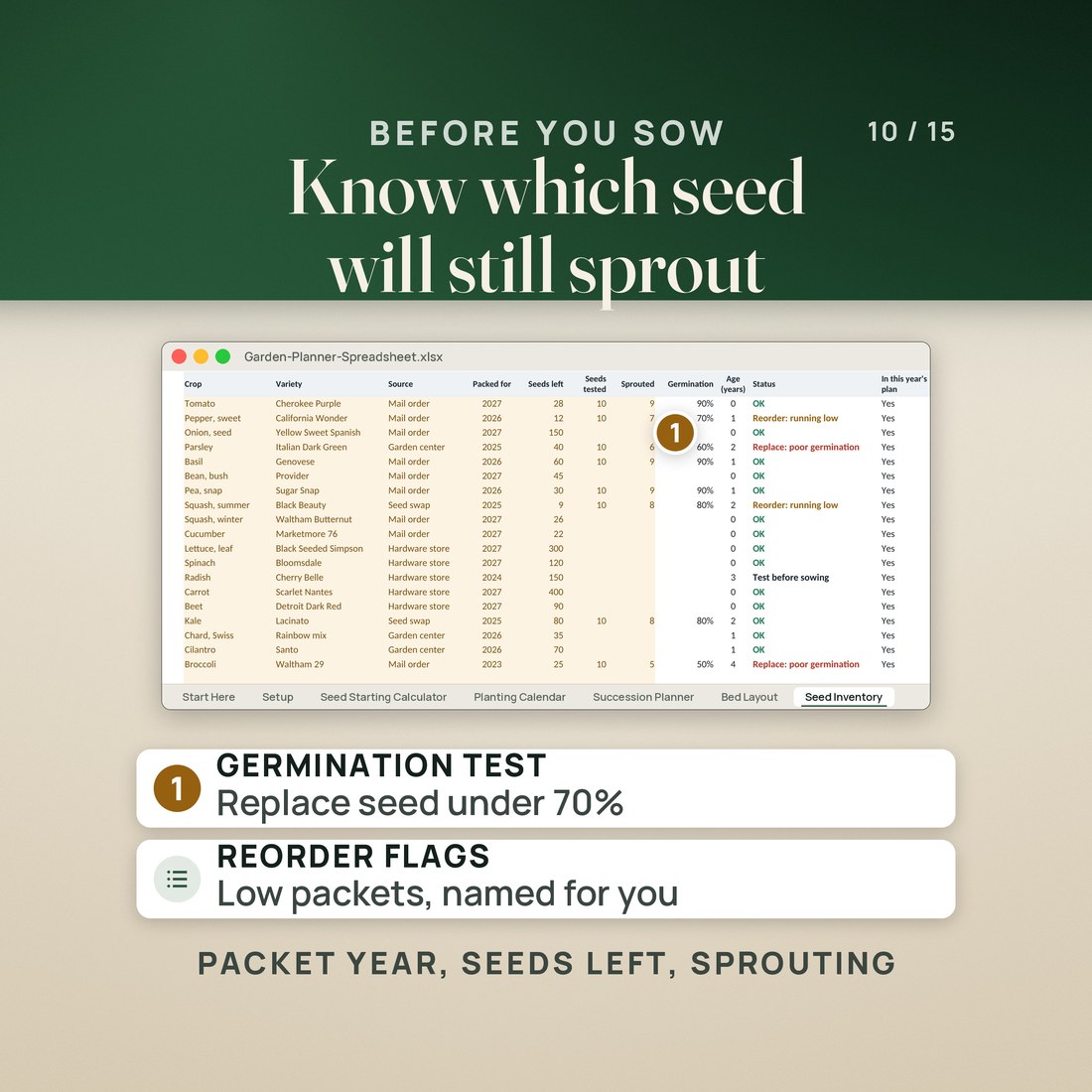
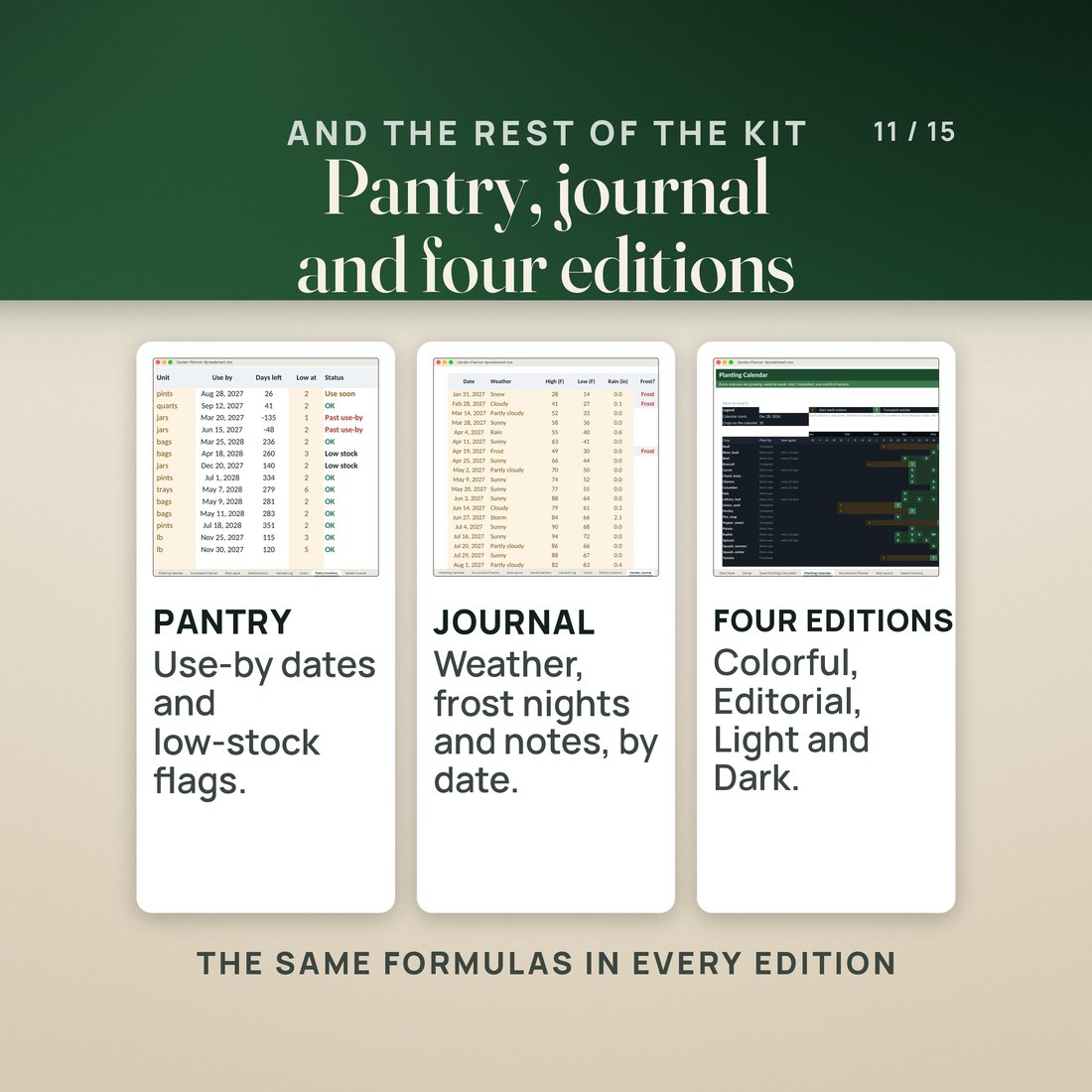
- A seed inventory with reorder and germination flags, a pantry inventory, a garden journal, and this week's tasks on the dashboard
- Thirteen tabs and 16,106 formulas for Excel 2016 or later and Google Sheets, in four color editions
Overview
Type your last frost date once, and every seed-starting, transplant, sowing and first-harvest date for 60 crops is worked out from it.
The seed packet says to start six to eight weeks before the last frost, and the calendar on the wall does not know when that is.
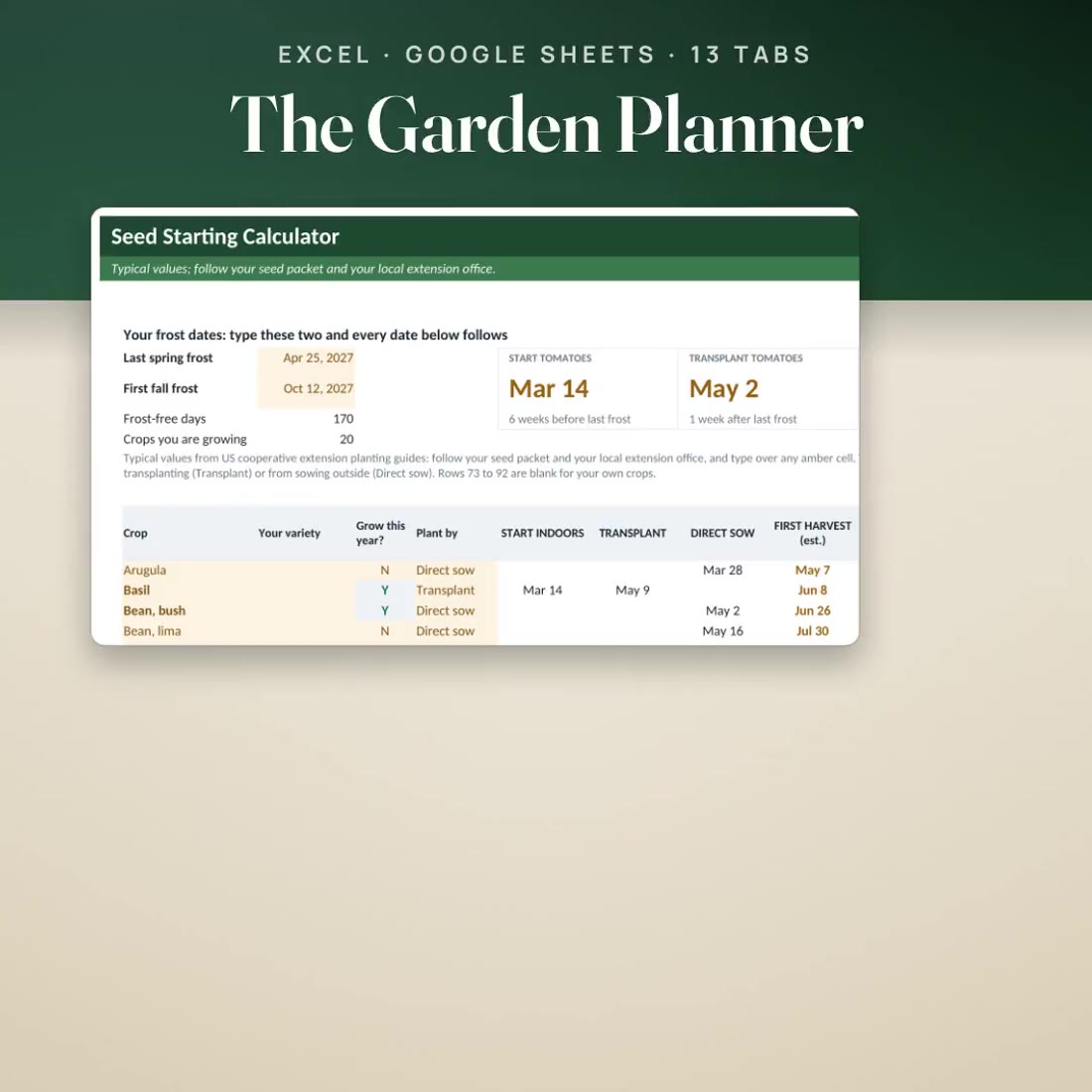
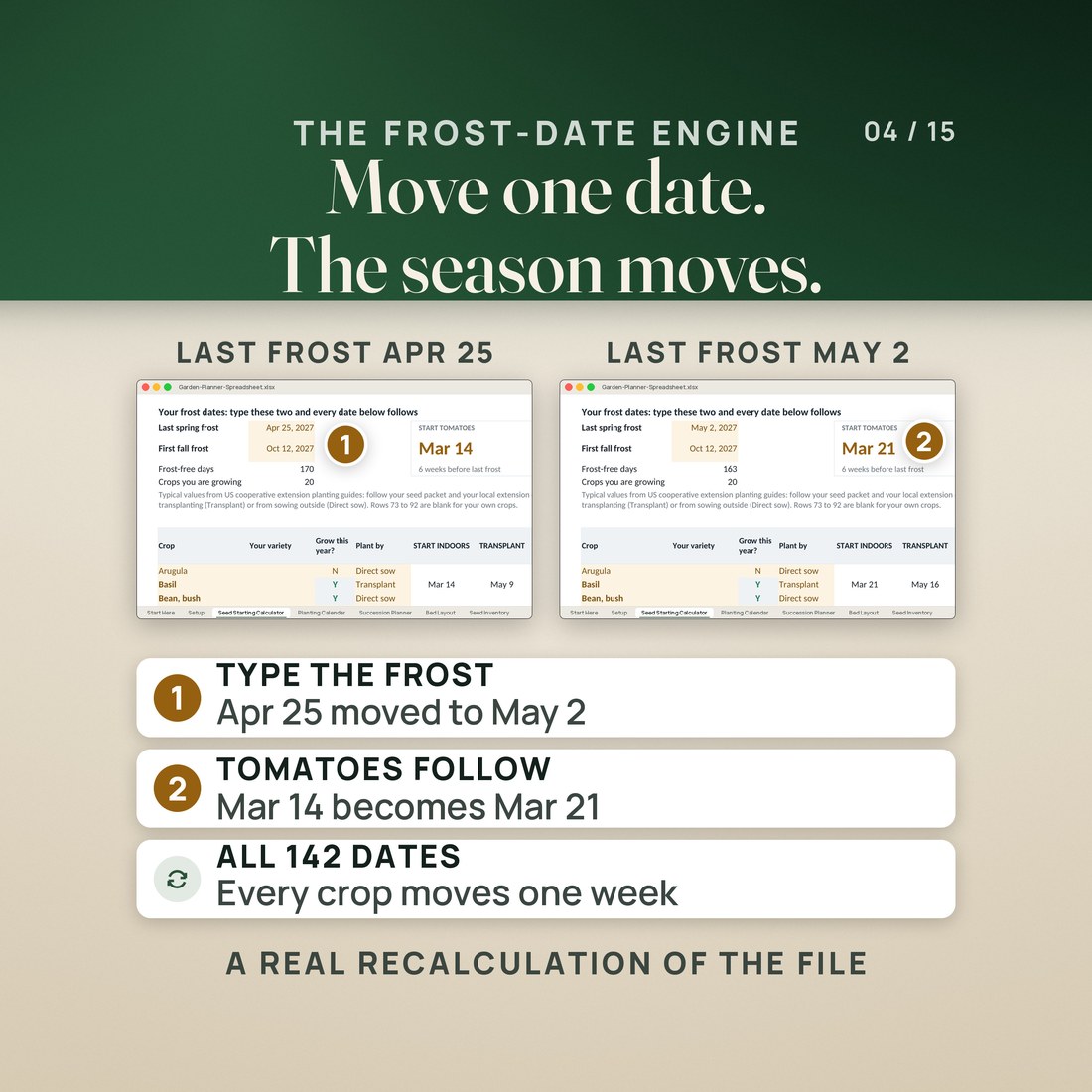
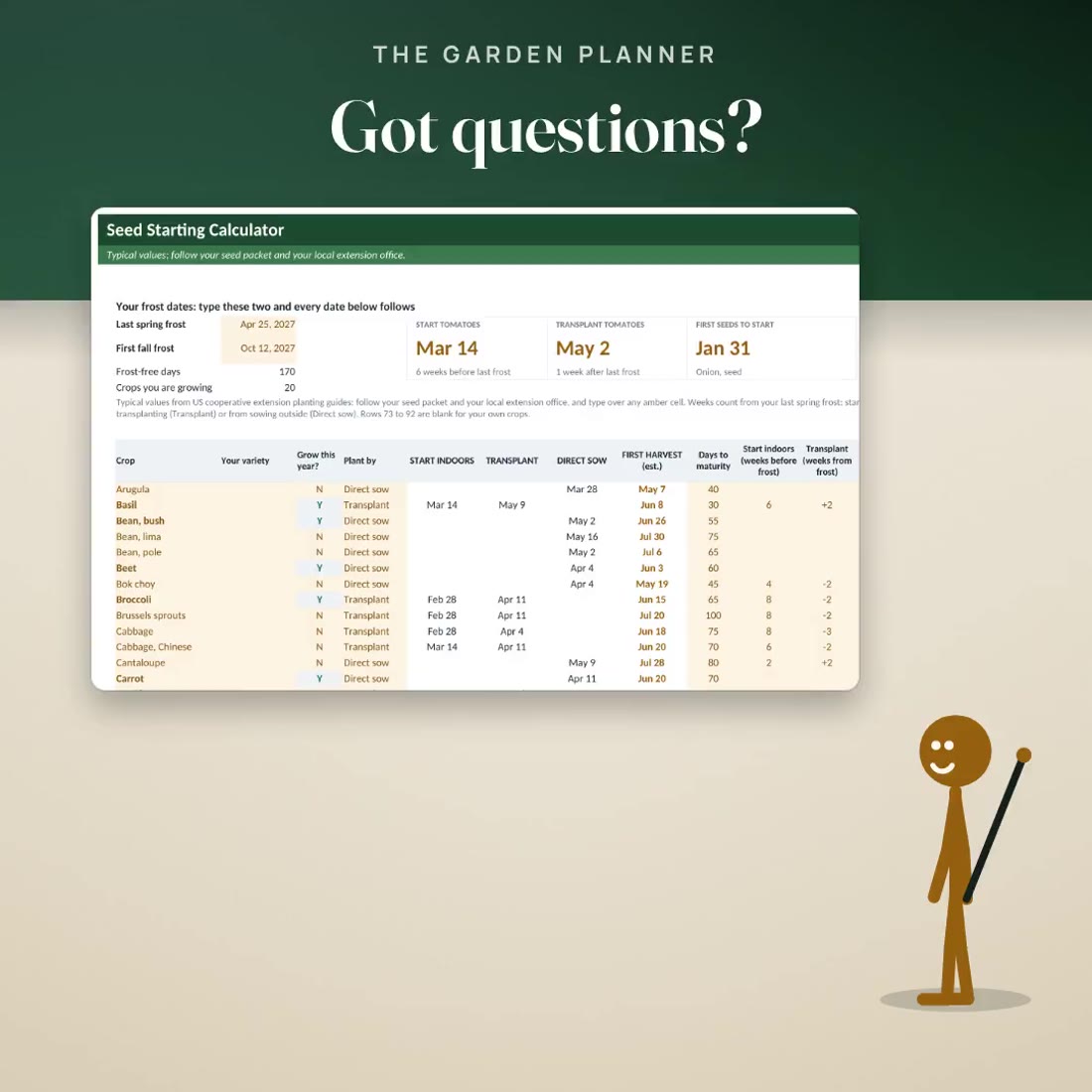
Type your frost dates once and this workbook dates every step for 60 crops. In the invented sample garden, a last spring frost of Apr 25, 2027 puts START TOMATOES at Mar 14. Move the frost date a week later, to May 2, and it reads Mar 21, and all 142 calculated dates in the crop library move with it.
What's Included
One ZIP, 6 files:
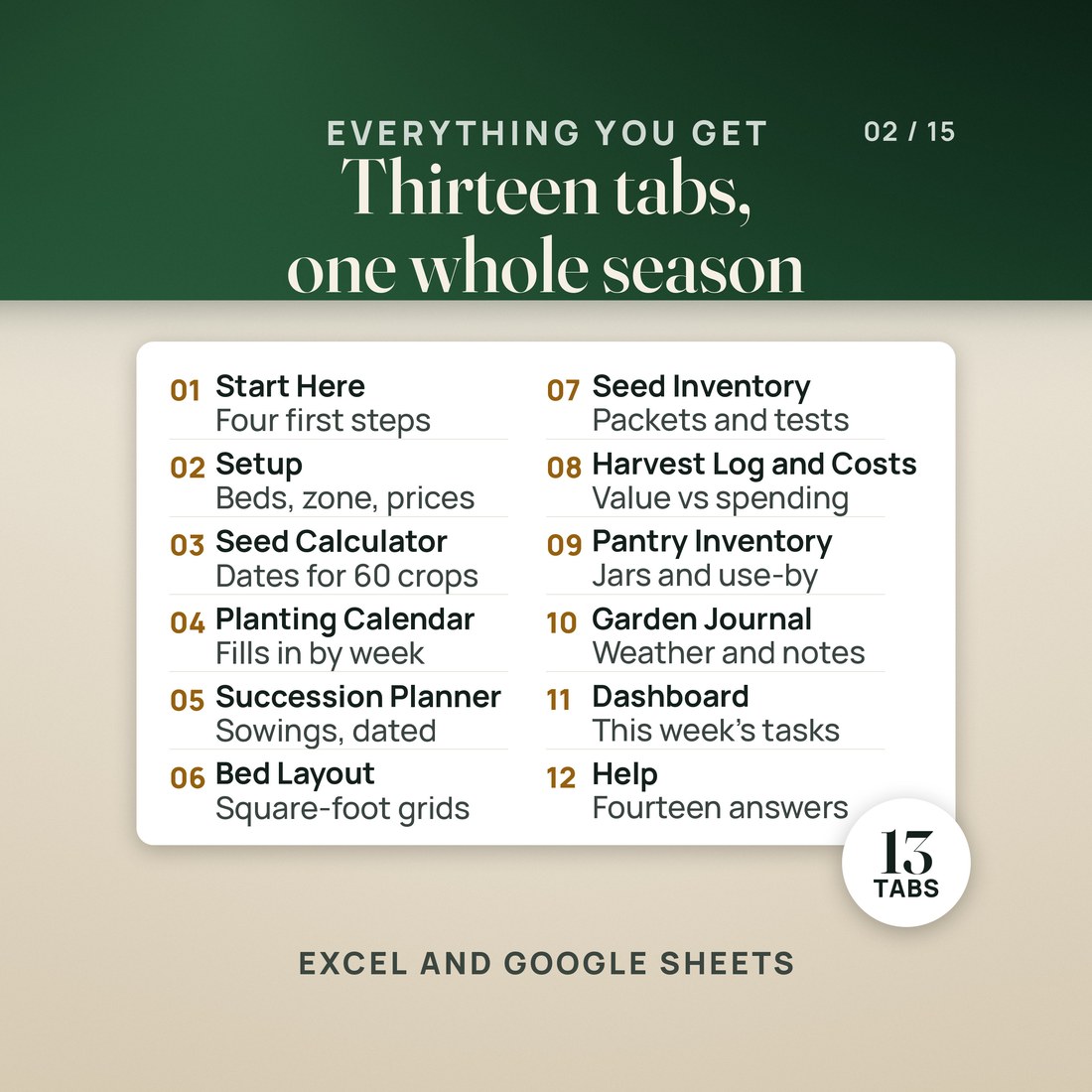
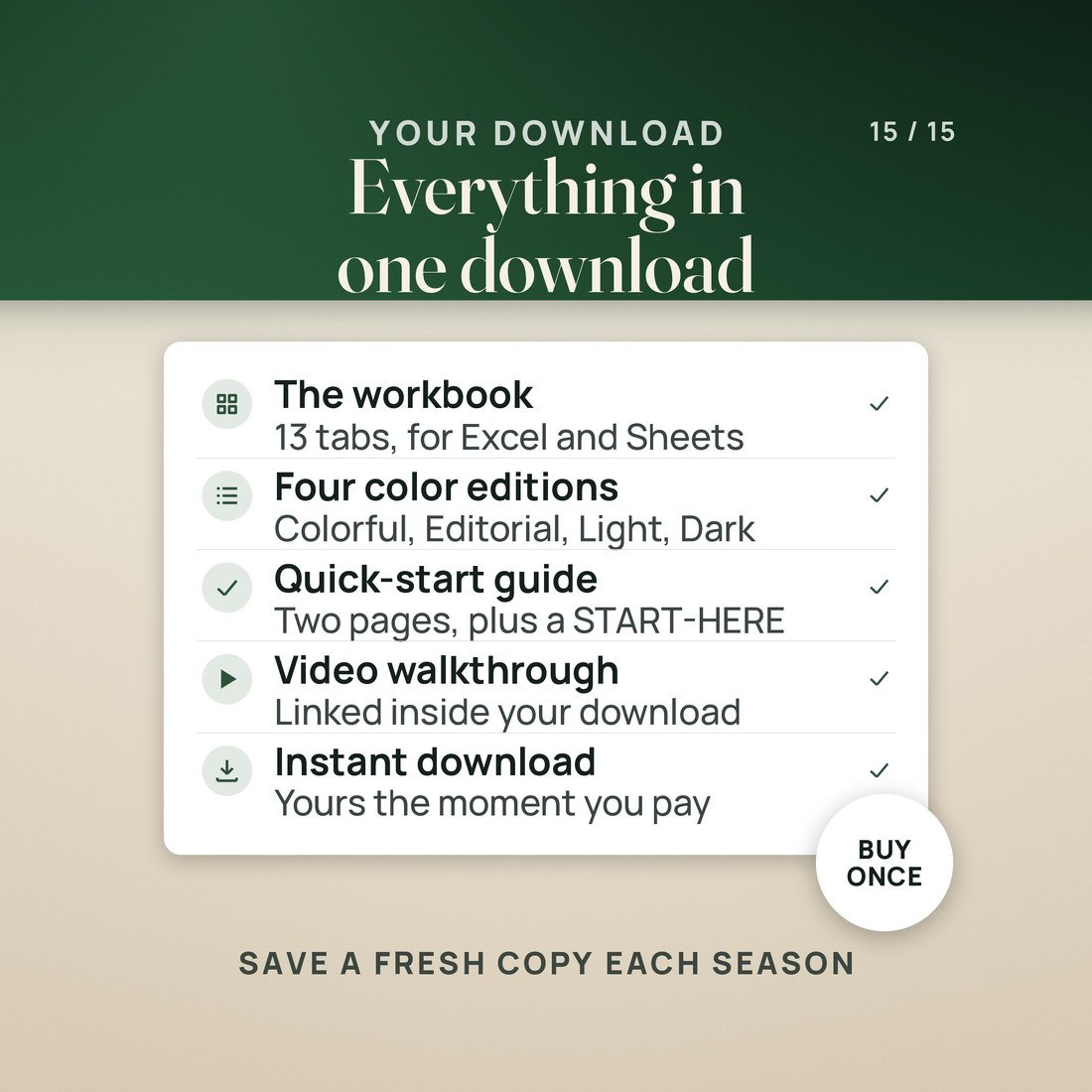
- The Garden Planner Spreadsheet, Colorful edition, with thirteen tabs: Start Here, Setup, Seed Starting Calculator, Planting Calendar, Succession Planner, Bed Layout, Seed Inventory, Harvest Log, Costs, Pantry Inventory, Garden Journal, Dashboard and Help
- The same workbook in the Editorial palette, and a zip holding the Colorful, Light and Dark editions
- A PDF with the Google Sheets copy link
- A two page Quick-Start PDF and a START-HERE file that explains how every date is worked out
Key Benefits
Why this one
Start indoors is your last spring frost minus the crop's weeks, transplant and direct sow add their weeks to the same date, and first harvest adds the days to maturity. Change the frost date and every date follows.
The succession planner steps each repeat sowing by its interval until the last date that still ripens before your first fall frost, and hardy crops pause in midsummer and pick up again for fall.
Plan each bed square by square: the layout counts the plants from each crop's spacing and flags a bed planted in the same crop family as last year.
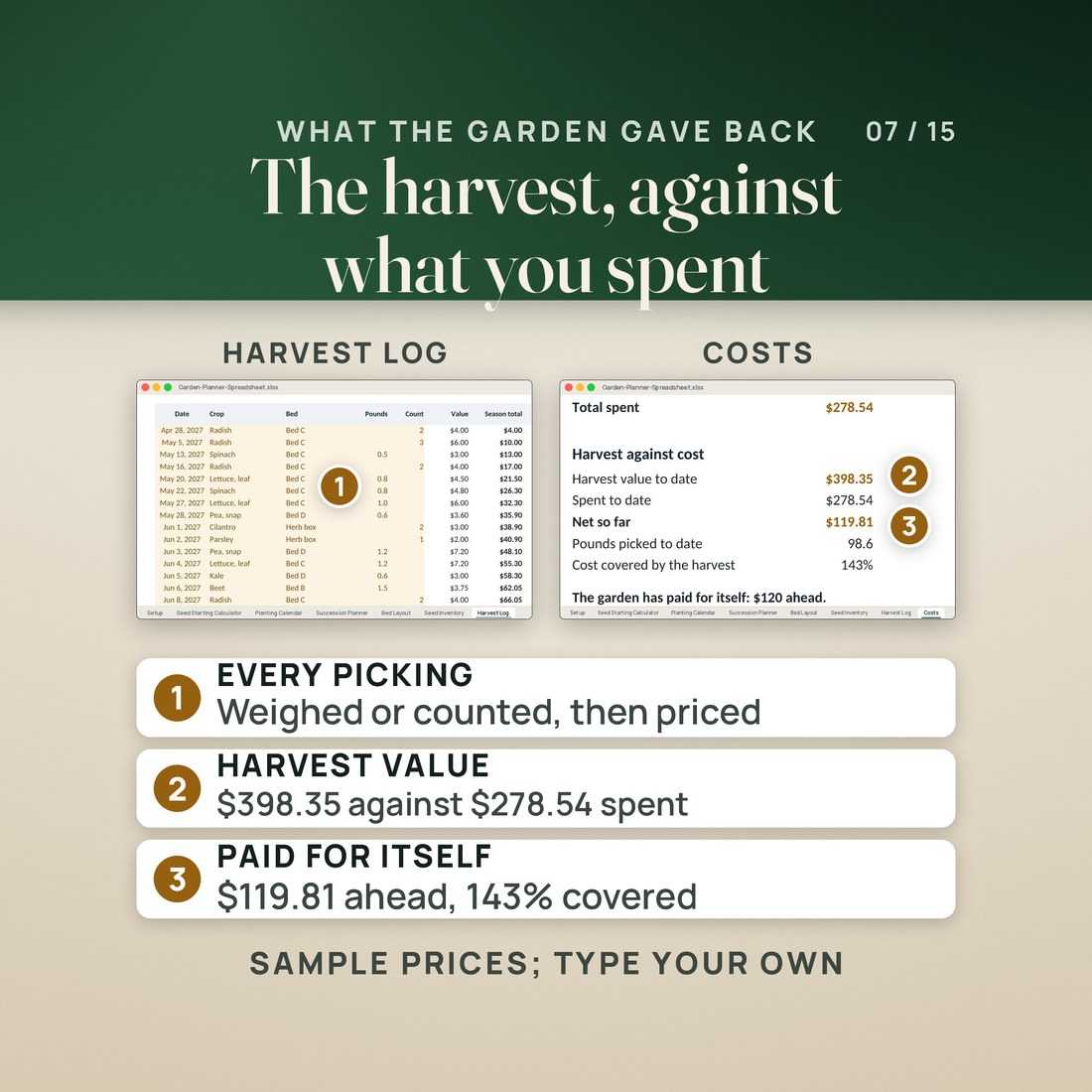
Log each picking in pounds or as a count, valued at your prices, and the dashboard sets the season's harvest value against what you spent. The invented sample reads $398 against $279.
The timings come from US cooperative extension planting guides, and every one is an amber cell. Type your seed packet's numbers over them.
Who It's For
Built for
- A vegetable gardener who wants seed-starting, transplant and sowing dates for their own frost dates
- A raised-bed or square-foot gardener who wants plant counts, a succession schedule and a rotation check
- A homesteader or kitchen gardener who wants the harvest, the costs and the pantry in one file
- A new gardener who wants the whole season laid out week by week
How It Works
Up and running in minutes
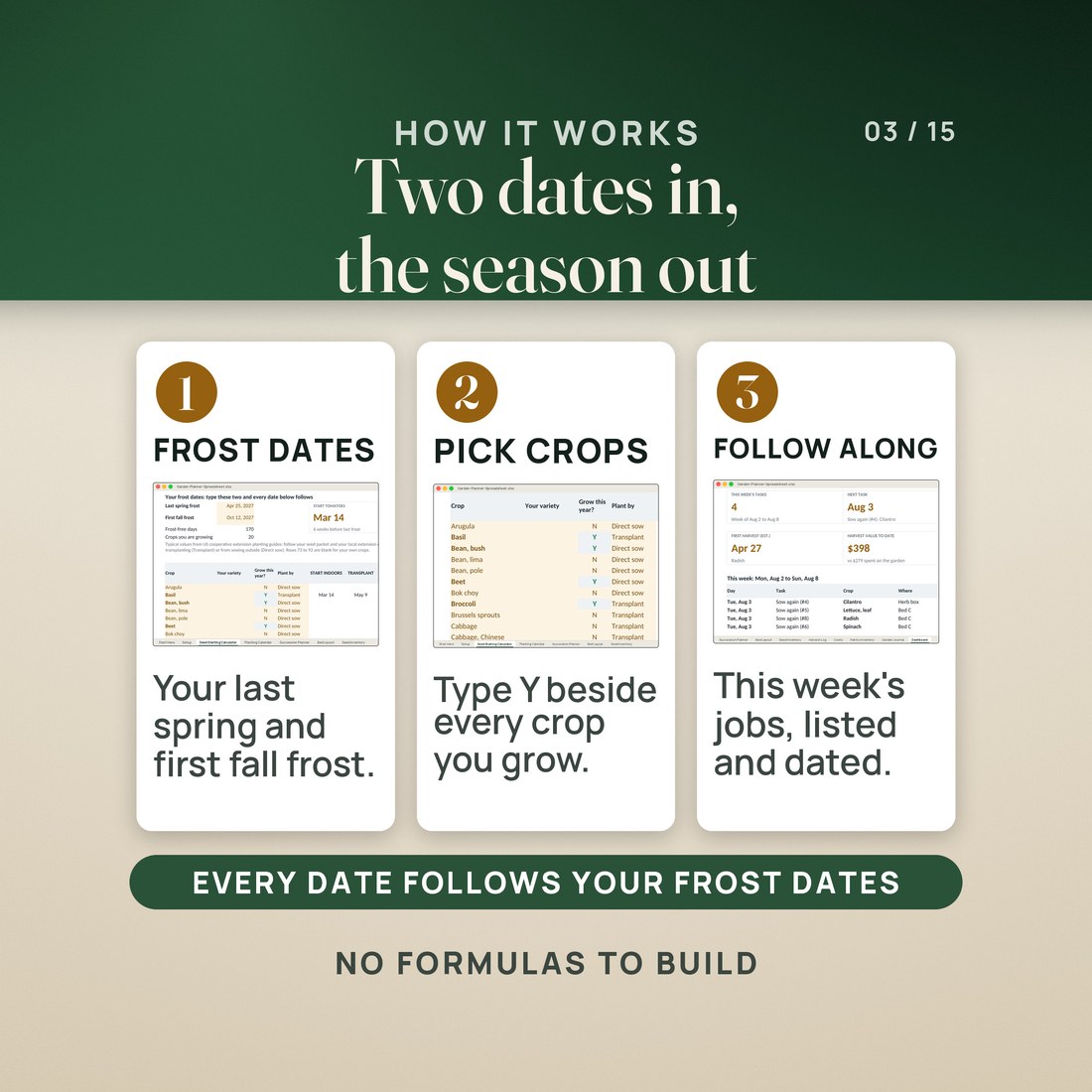
Type your average last spring frost and first fall frost at the top of Seed Starting Calculator. Your local cooperative extension office has both.
Type Y beside each crop you will grow and choose Transplant or Direct sow, or add your own crops in the blank rows.
Read the planting calendar and the succession planner, and lay out your beds square by square.
Log harvests, costs, seeds, pantry batches and journal notes, and the dashboard shows this week's tasks and what the garden is worth.
Why It's Different
Not another template
Most garden planners are printable pages: a calendar you fill in by hand after working the dates out yourself. This one does the working out. Type your frost dates and it dates every start, transplant, sowing and first harvest for the crops you pick, lays them on a week-by-week calendar, schedules repeat sowings up to the last one that will ripen before fall frost, counts the plants in each bed, and keeps the harvest and the costs in the same file. The timings are typical extension values you can change, and it says so.
Delivery & Compatibility
Instant, and it opens in what you already use
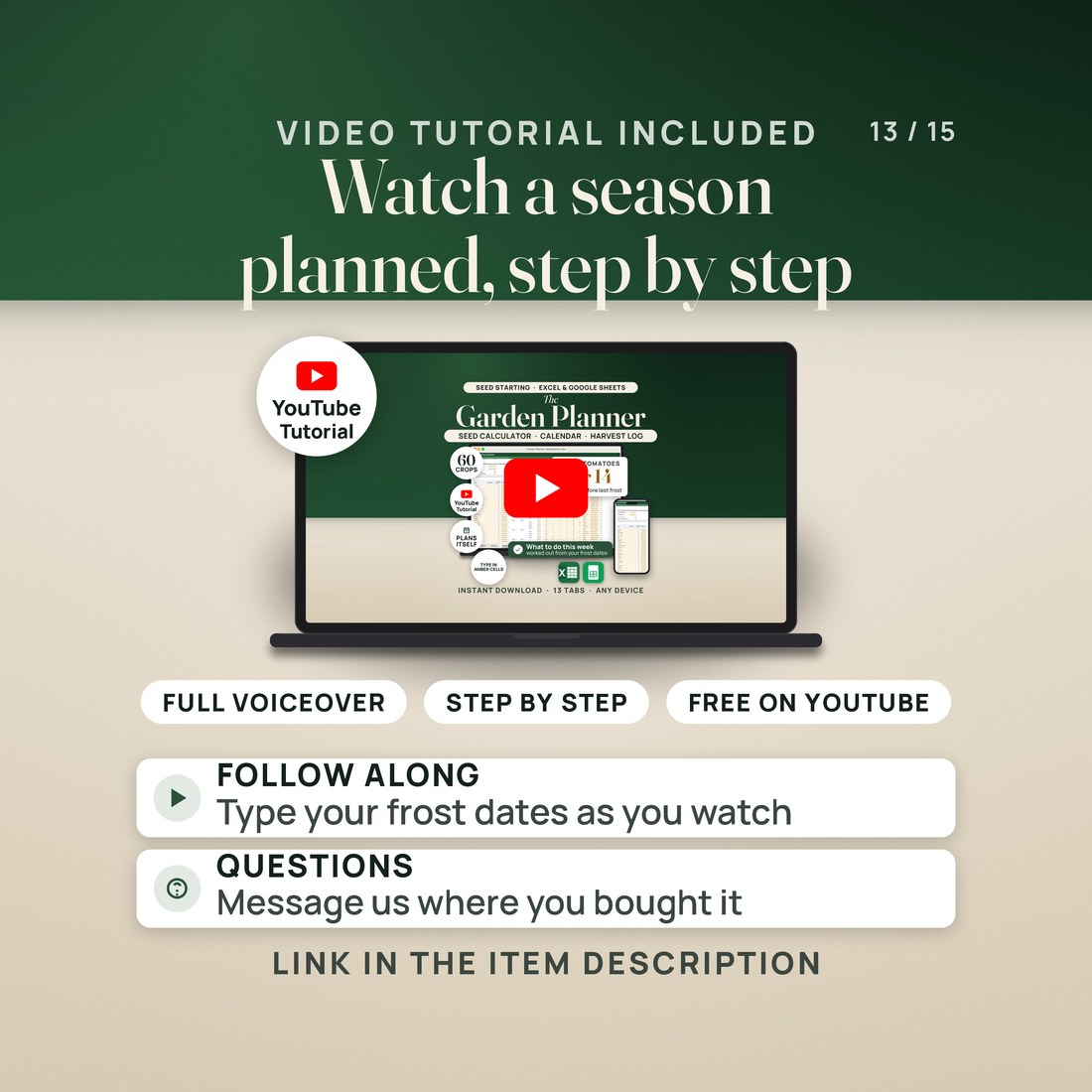
As soon as your order is complete you get instant access to download the ZIP: the workbook in four color editions, the Google Sheets copy link, a two page Quick-Start PDF and a START-HERE file. Start with the Quick-Start guide and the free video walkthrough. Nothing ships and nothing installs.
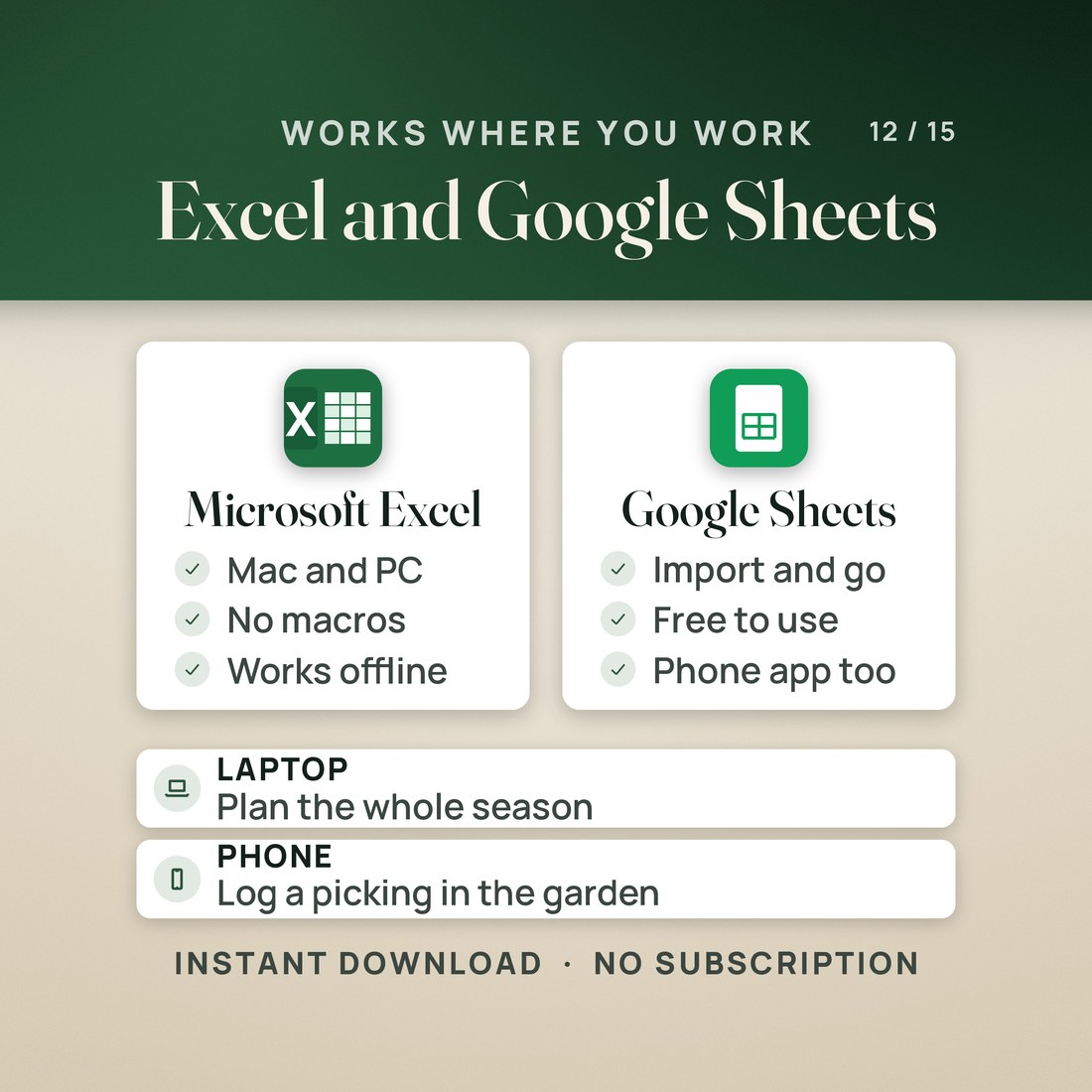
One ZIP, instant download. Built for Excel 2016 or later and for Google Sheets, through the copy link or File, Import, Upload; Apple Numbers opens it but drops some formatting. Every formula result ships saved, so the sample shows before anything recalculates. No macros, no account, no subscription and nothing to install.
FAQ
Questions, answered
What format is this?
One workbook (.xlsx) in four color editions (Colorful, Editorial, Light and Dark), with a quick-start PDF, a START-HERE file and the Google Sheets access PDF. 6 files in one ZIP, yours the moment payment clears.
Can I add my own crops?
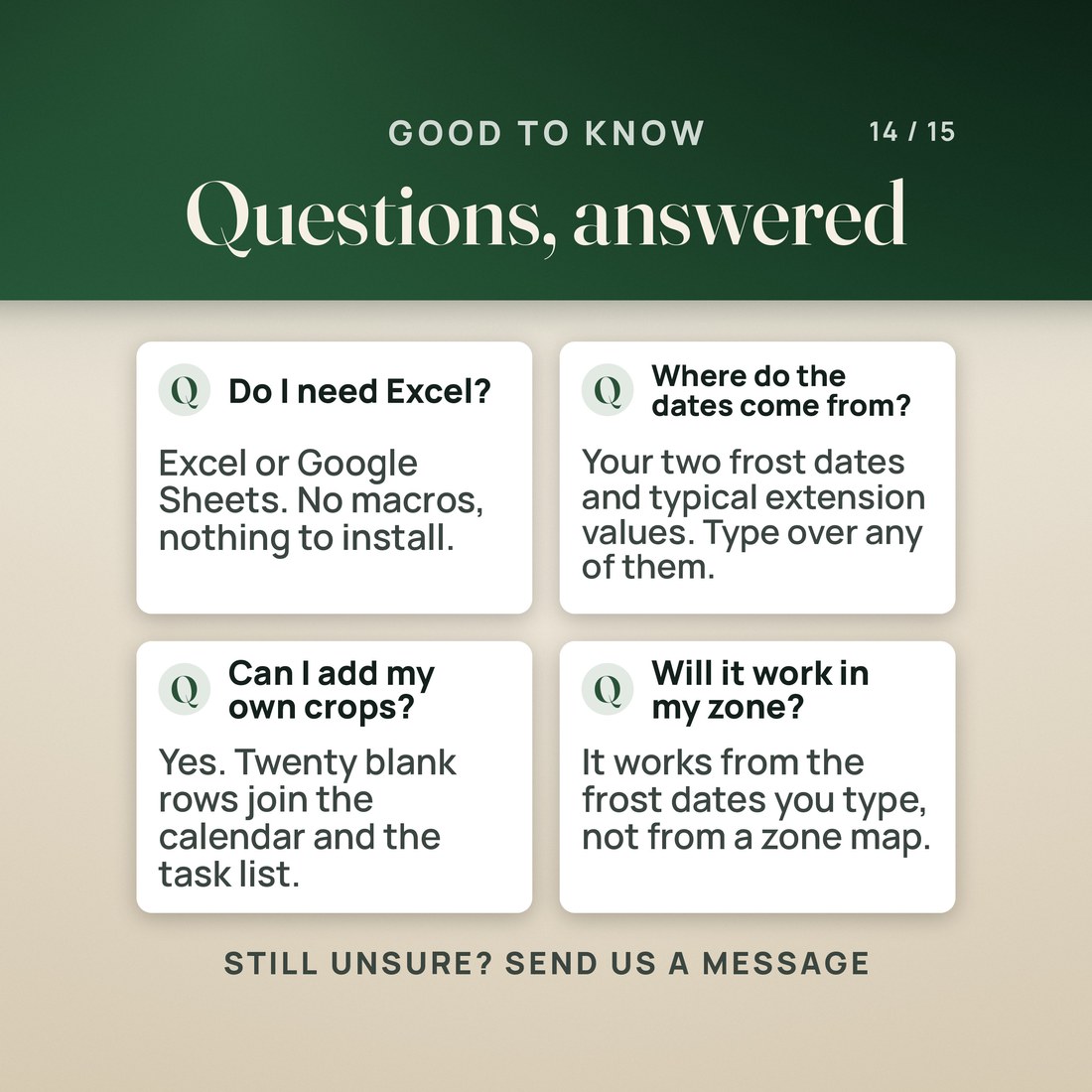
Yes. The library has 20 blank rows for your own crops, and every timing, spacing and succession value for the 60 listed crops is an amber cell you can change.
Does it work in Google Sheets?
Yes. Open the copy link and click Make a copy, or upload the .xlsx with File, Import, Upload. The workbook is built only from functions Excel and Google Sheets both support.
Where do I find my frost dates?
Ask your local cooperative extension office, or use a frost-date lookup for your ZIP code. You want the average last spring frost and the average first fall frost.
What does it compute?
Start indoors, transplant, direct sow and first harvest dates for each crop, a week-by-week planting calendar, every repeat sowing up to the last one that ripens before fall frost, plants per square and a rotation check, seed packets to reorder, replace or test, harvest value against costs, pantry batches near or past their window, and this week's tasks.
Are the planting dates right for my garden?
They are typical values from US cooperative extension planting guides, worked from the frost dates you type, and every timing can be changed. Frost dates are averages and first harvest is an estimate, so follow your seed packet, your local extension office and the forecast.
The crop timings are typical values from US cooperative extension planting guides, and crops those guides do not list take values from close relatives; follow your seed packet and your local extension office. Frost dates are averages, and first harvest is an estimate from days to maturity. The calendar grid starts the week that holds January 1 of your season year, so an earlier seed start appears on the task list but not on the grid. Fall-planted garlic and perennial crowns are not in the library. Use within on Pantry Inventory is a best-quality window you choose, not a food safety rule; for home canning, follow a tested recipe. Harvest prices are sample prices, and the four color editions are separate files. Maple Hollow Kitchen Garden and every figure in the sample were invented for the example. Digital product; because the files are delivered instantly, all sales are final.