 ▶
▶
 ▶
▶Nurse Report Sheet Bundle
Type one first dose time and the workbook says what is due next, for whom, in which room. 156 fillable sheets across seven units, five layouts, two print styles, two paper sizes.
It is 07:45, you have four patients, and the arithmetic has already started. The metoprolol goes in at 08:00 and it is every twelve hours, the pantoprazole is at 08:30, there are labs at 09:00, and you are already late for a safety round.
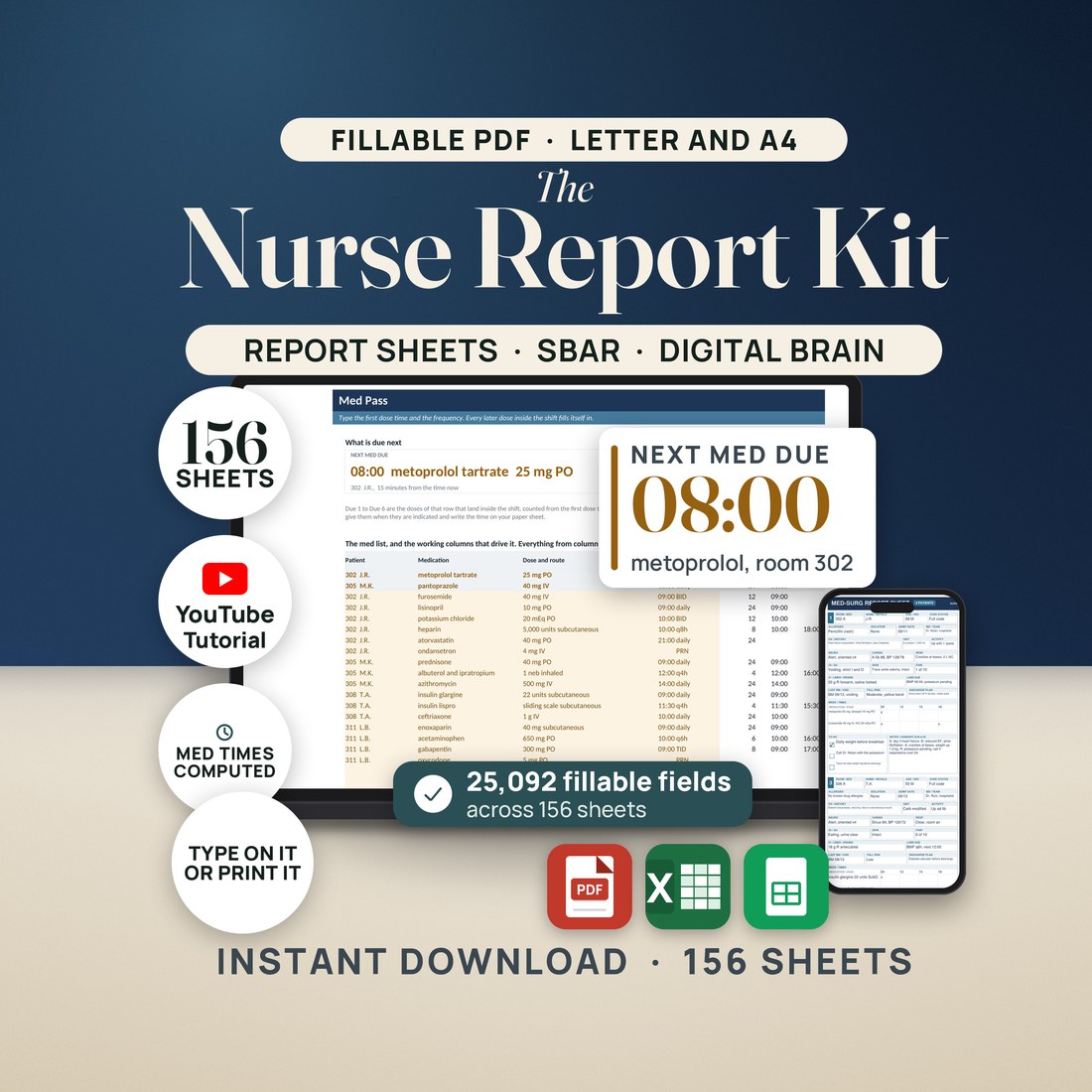
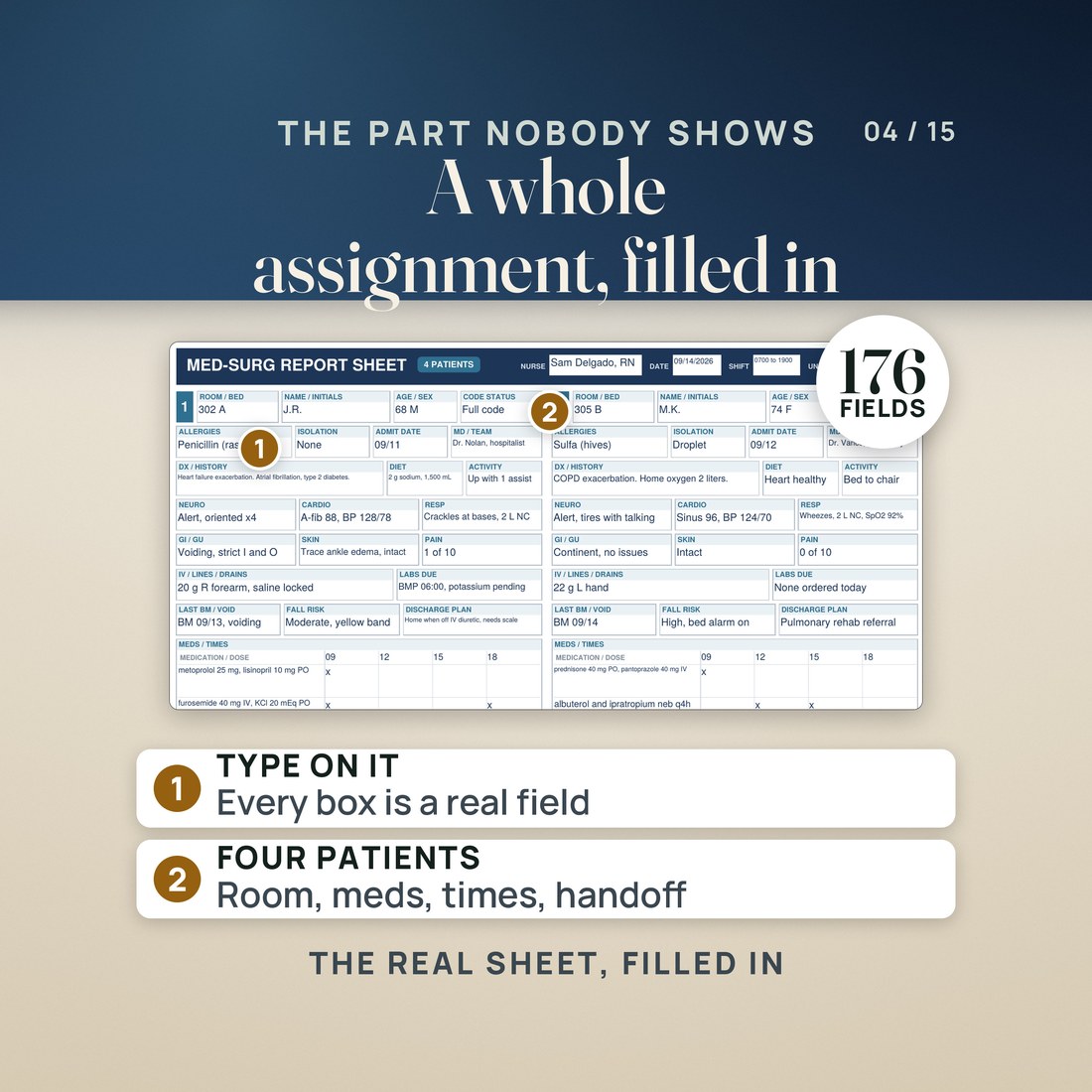
- 156 fillable sheets with 25,092 real form fields between them, 1,516 of them real check boxes. Type on a tablet or a laptop and save a copy per shift, or print them blank
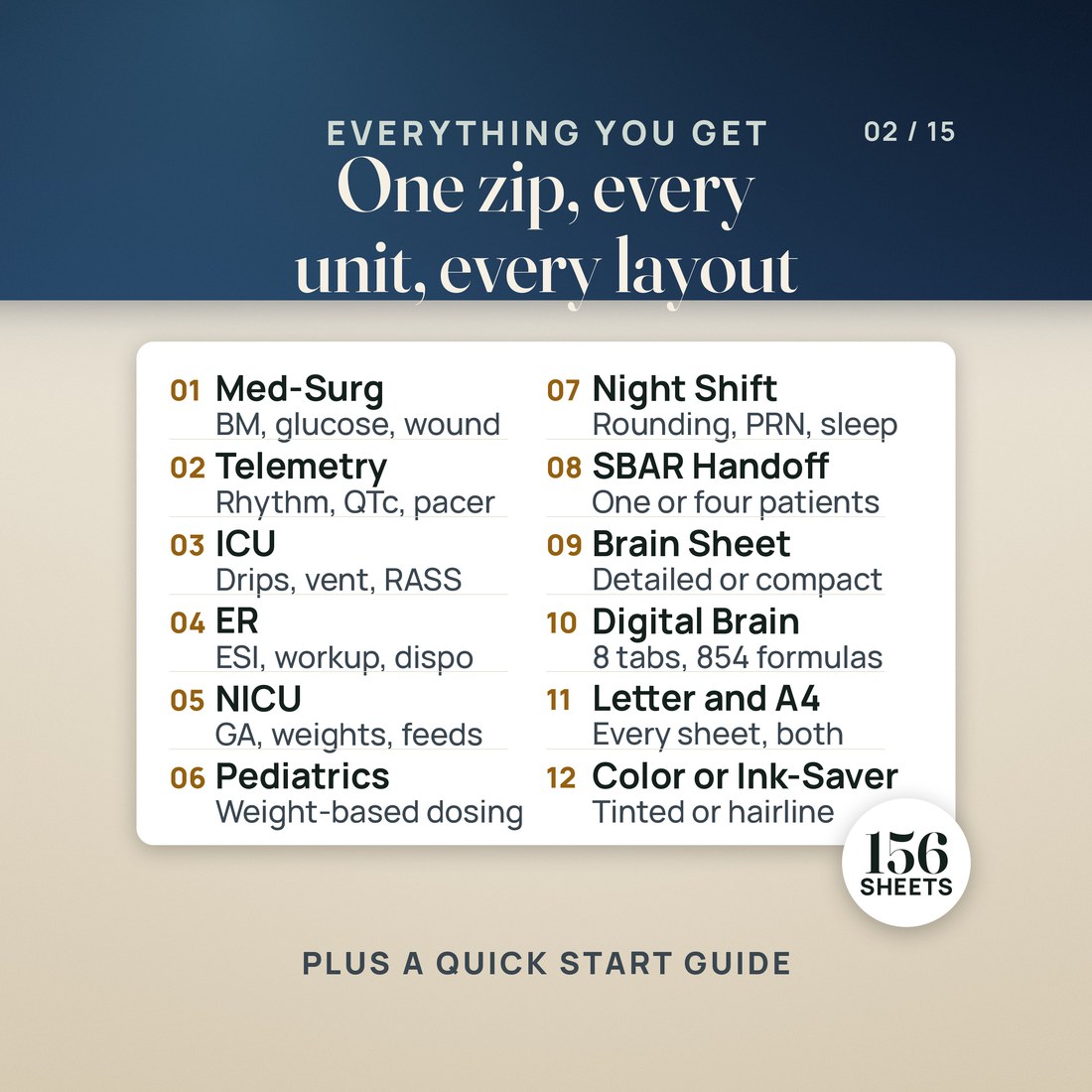
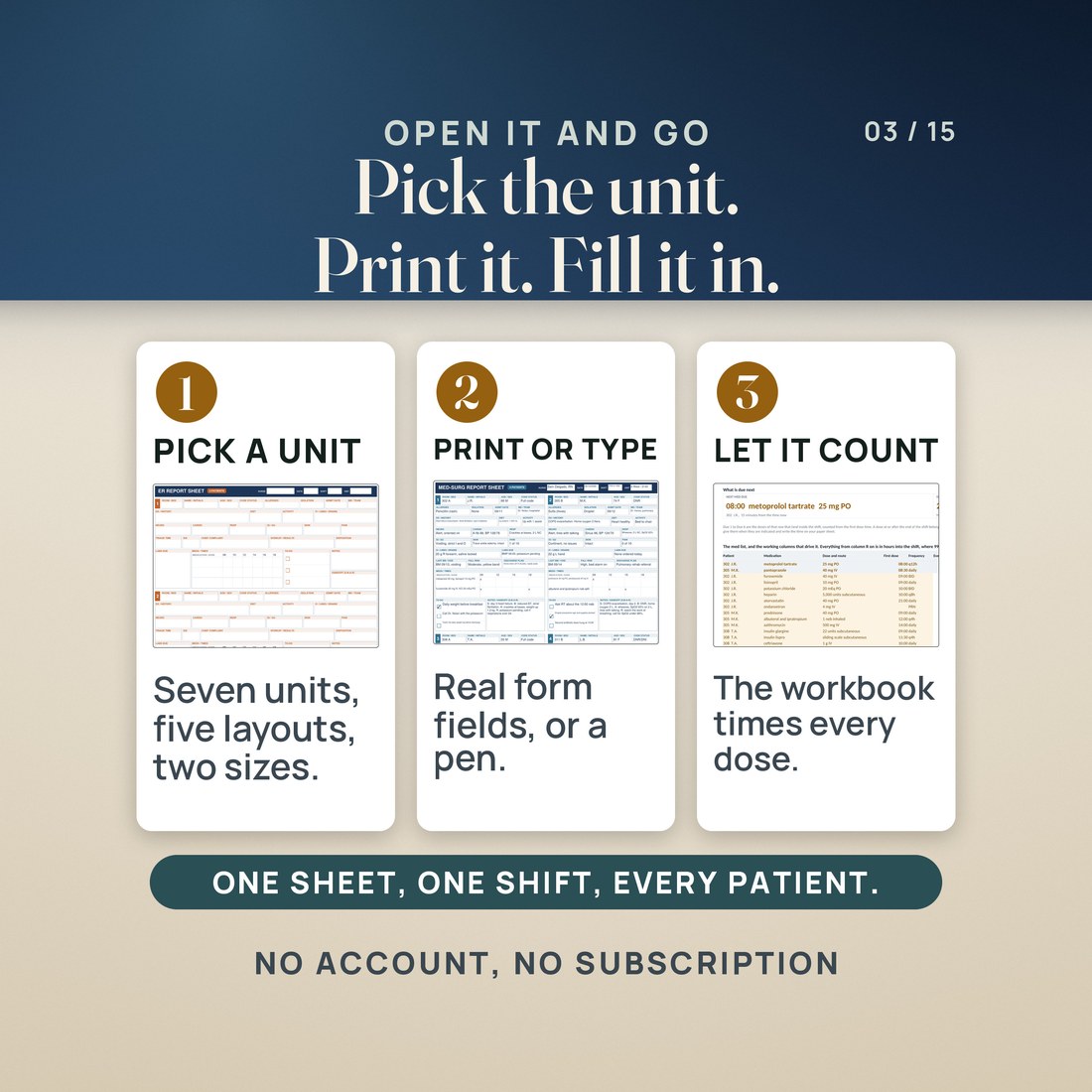
- Seven units, five layouts, two print styles and two paper sizes: 140 unit sheets (Med-Surg, Telemetry, ICU, ER, NICU, Pediatrics and Night Shift, at 1, 2, 3, 4 and 6 patients per page, in Color and Ink-Saver, in US Letter and A4) plus 16 SBAR and brain sheets
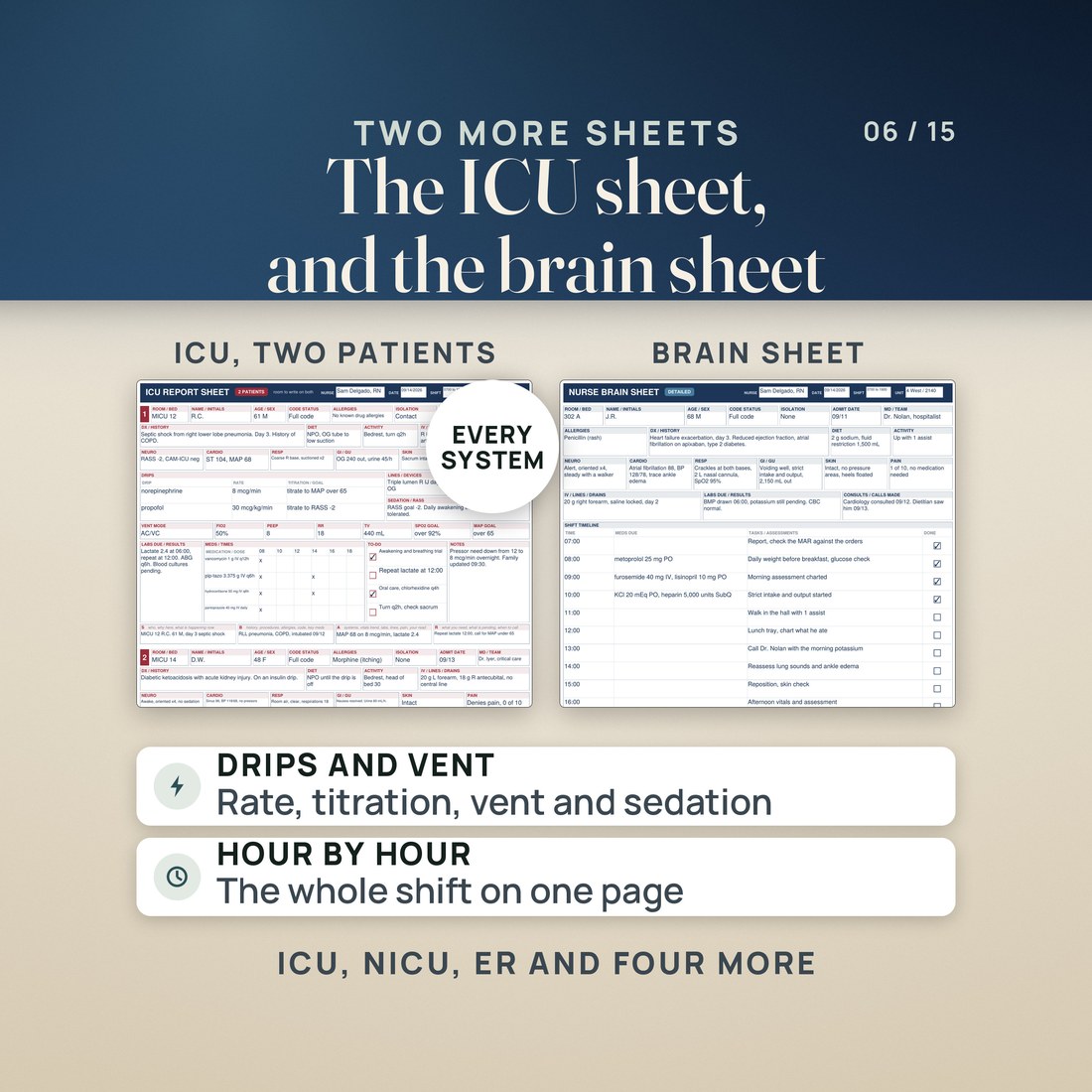
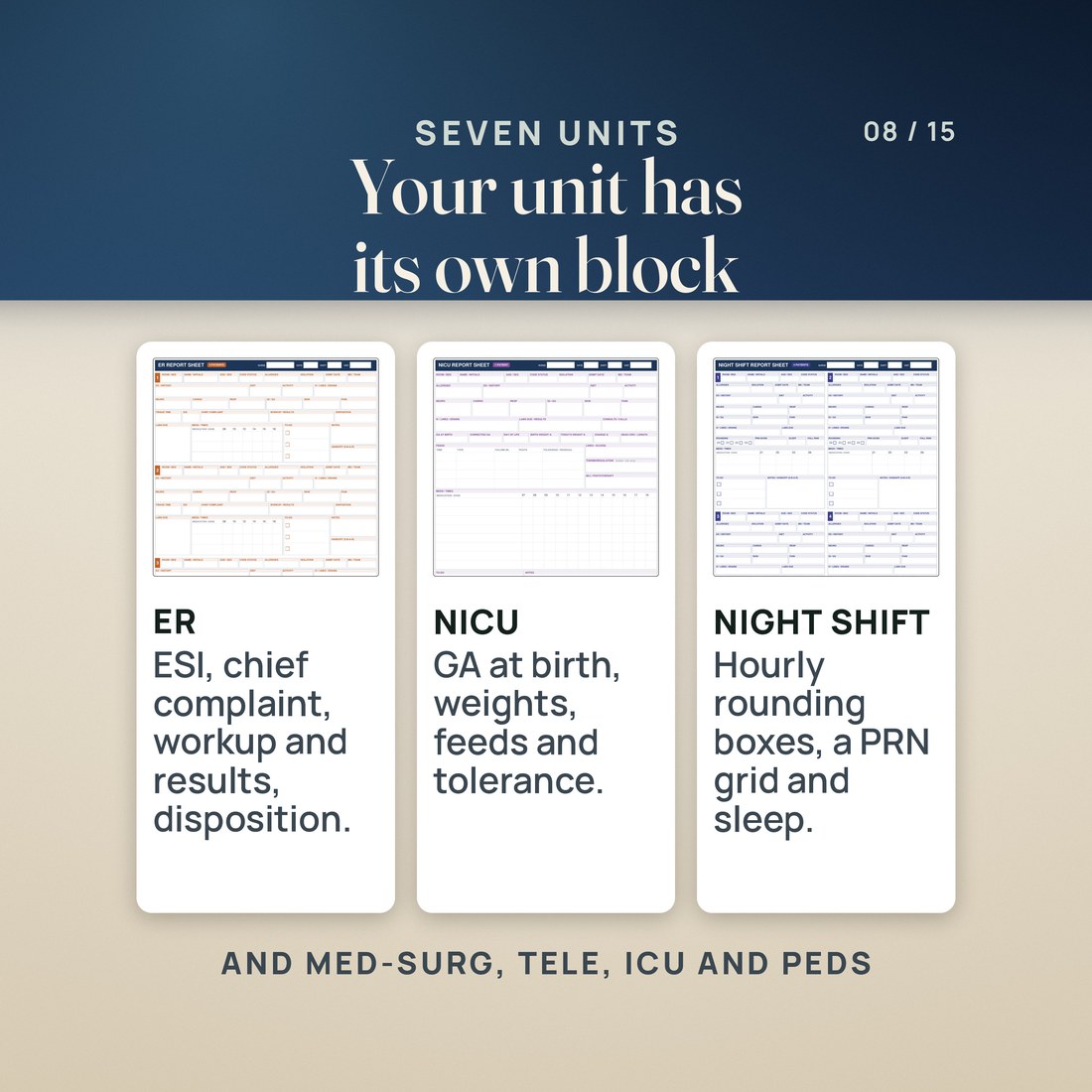
- Unit blocks that are actually different: a drip grid with a titration goal and a ventilator band on ICU, rhythm and QTc and anticoagulation on Telemetry, day of life and a feeds grid in mL on NICU, weight-based dosing in mg per kg on Pediatrics, ESI and disposition on ER, and a medication grid timed 19:00 to 06:00 on Night Shift
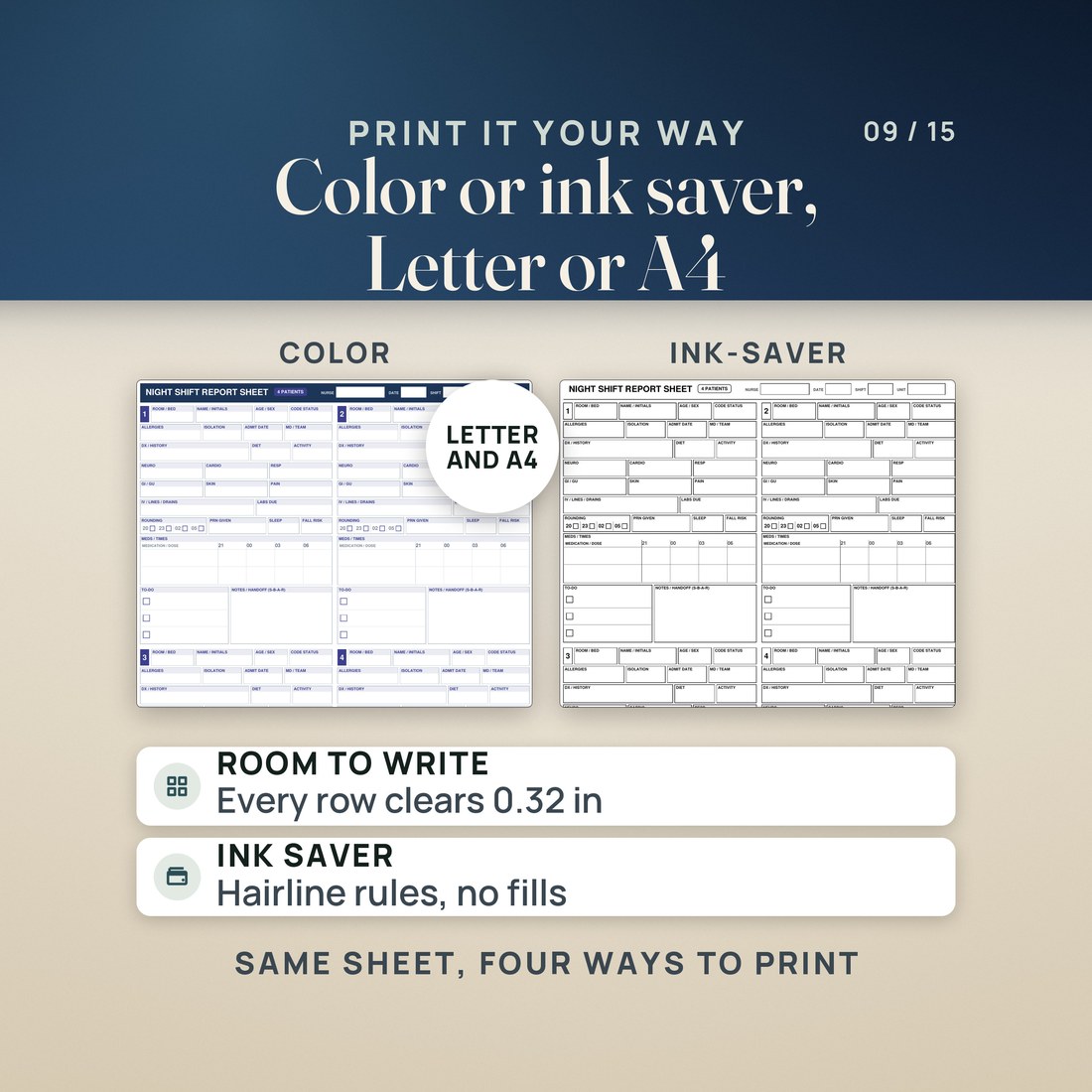
- Every handwriting row on the 4 and 6 patient sheets is at least 0.32 inch tall, measured at 0.324 inch on the finished page, and no row on any of the 156 sheets is under 0.306 inch. Where a unit block is tall the layout drops a med row rather than squeeze a box
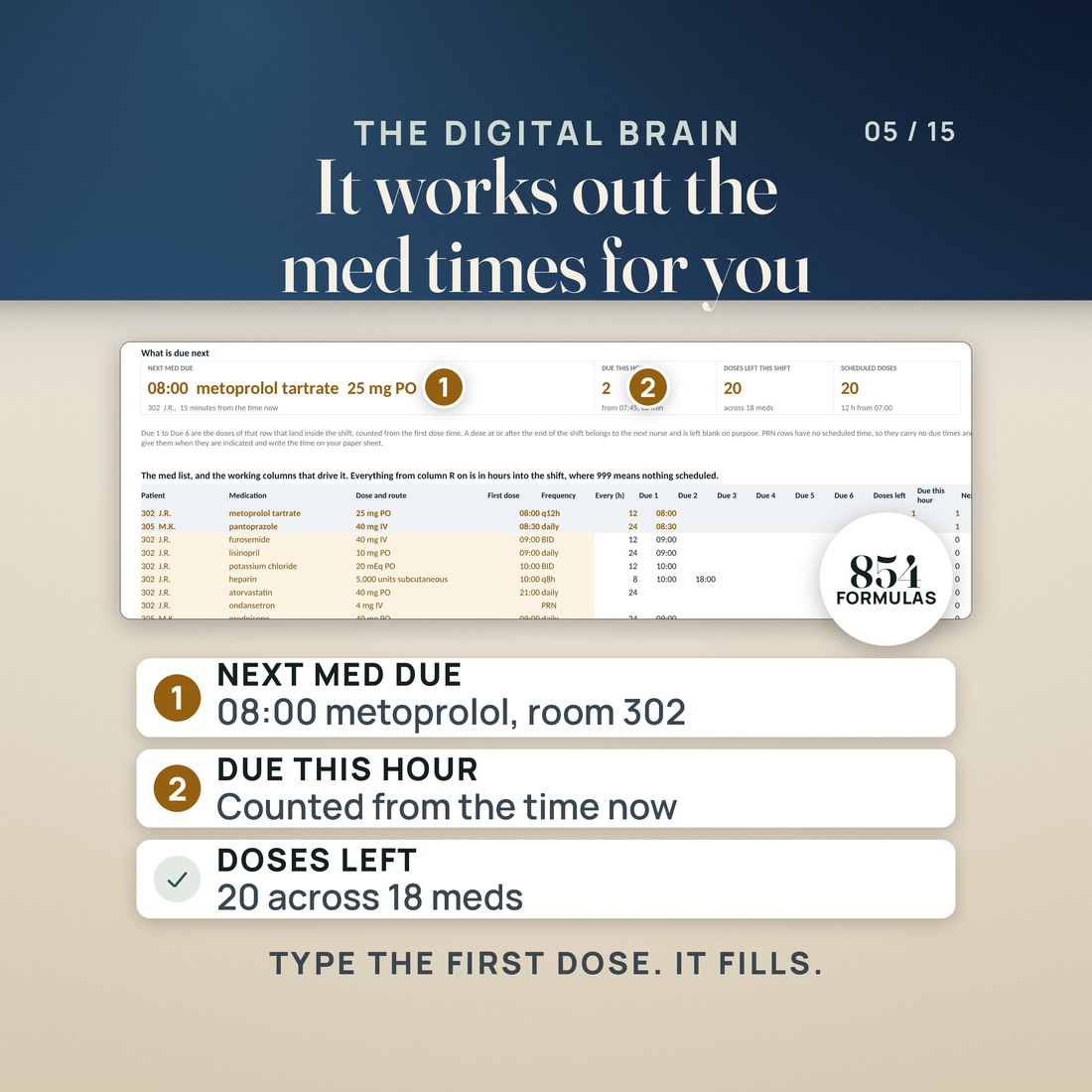
- The Nurse Digital Brain workbook: eight tabs, 854 working formulas, four color editions for Excel or Google Sheets. Type a first dose time and a frequency and it works out every dose time, what is due this hour, how many doses are left and which med in which room is next
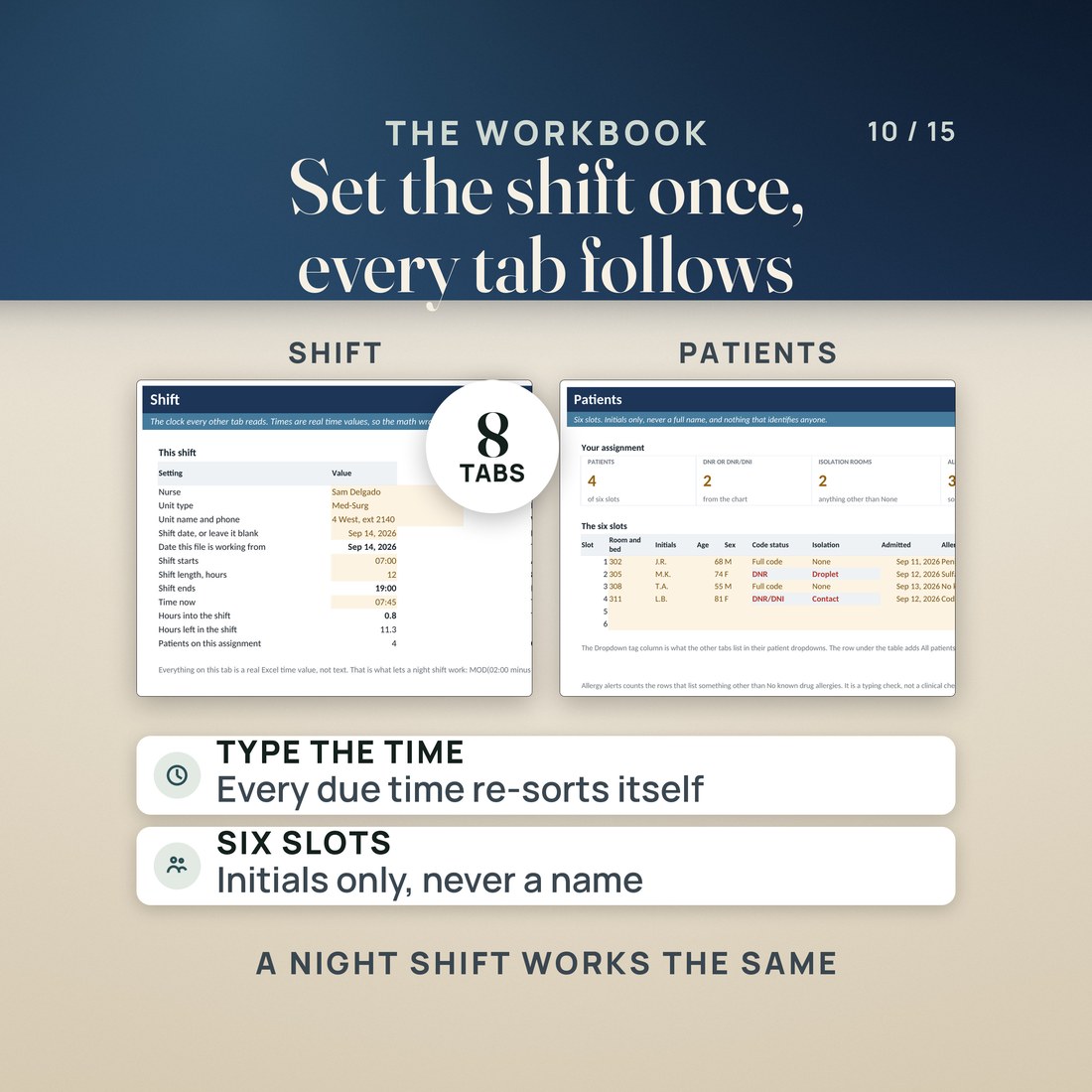
- One cell moves the whole file to nights: type 19:00 as the shift start and every due time, every hour of the shift clock and every sort order wraps through midnight on its own
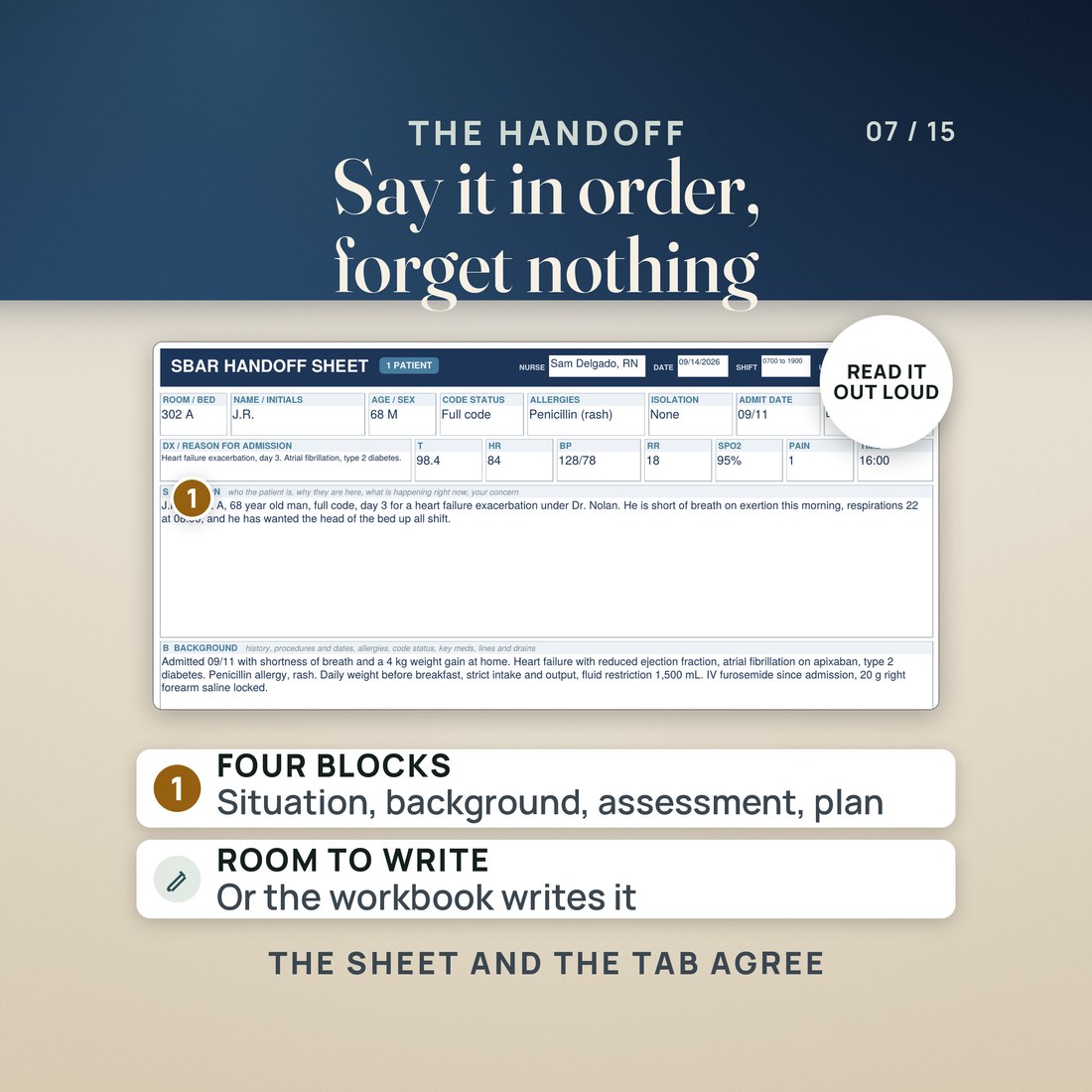
- An SBAR Builder that pulls the patient's facts across, takes your four boxes and assembles four paragraphs to read out loud at handoff
- No subscription, no account, nothing to install, and no Canva
Overview
Type one first dose time and the workbook says what is due next, for whom, in which room. 156 fillable sheets across seven units, five layouts, two print styles, two paper sizes.
It is 07:45, you have four patients, and the arithmetic has already started. The metoprolol goes in at 08:00 and it is every twelve hours, the pantoprazole is at 08:30, there are labs at 09:00, and you are already late for a safety round.
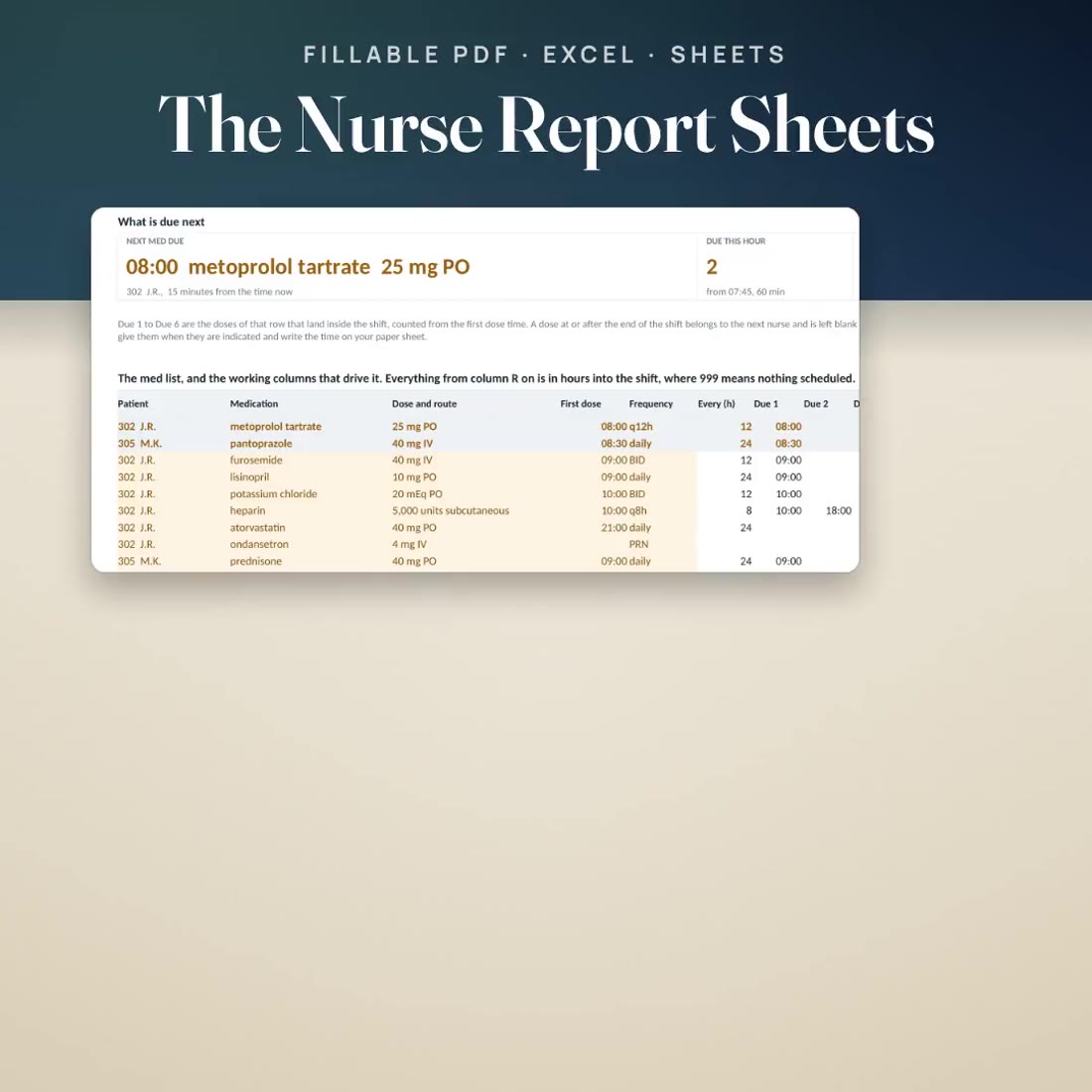
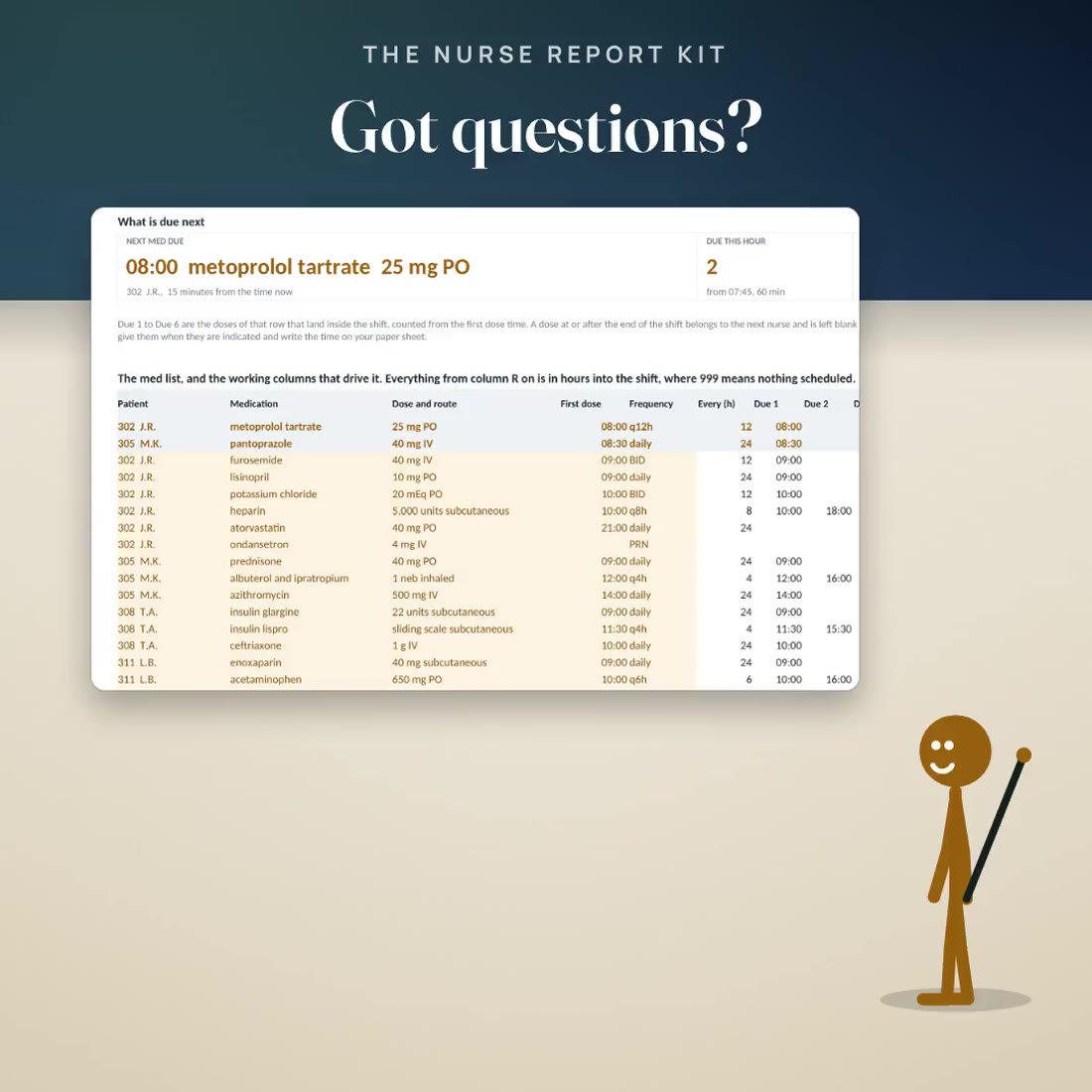
The workbook does that part of it. Type the first dose time into one cell and NEXT MED DUE reads 08:00 metoprolol tartrate 25 mg PO, with 302 J.R., 15 minutes from the time now under it, 2 doses due in this hour and 20 left in the shift. Move that one first dose to 09:00 and the headline changes to 08:30 pantoprazole 40 mg IV in room 305, because the pantoprazole is now the next thing due.
What's Included
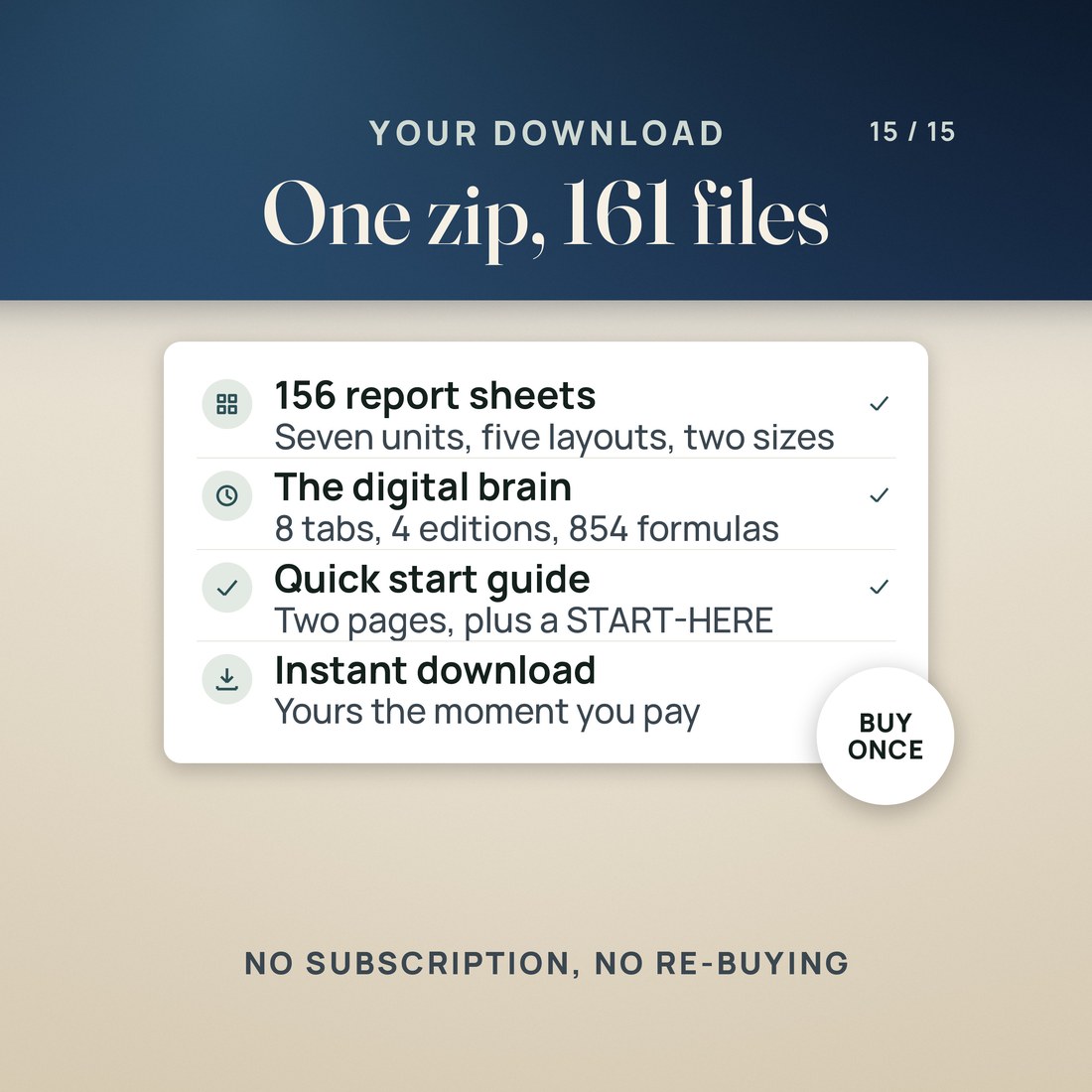
One ZIP, 161 files:
- One ZIP holding 156 fillable PDF sheets, which is 39 sheet designs drawn once in Color and once in Ink-Saver and set for both US Letter and A4
- 140 unit report sheets: Med-Surg, Telemetry, ICU, ER, NICU, Pediatrics and Night Shift, each at 1, 2, 3, 4 and 6 patients per page
- 16 handoff sheets: SBAR for 1 patient and for 4, and the brain sheet in a detailed one patient layout and a compact four patient layout
- The Nurse Digital Brain workbook in four color editions with eight tabs: Start Here, Shift, Patients, Med Pass, Shift To-Do, Vitals, SBAR Builder and Help
- A two page Quick-Start PDF and a START-HERE file with the four things to do first, what is in each folder, and the honest warnings
Key Benefits
Why this one
Seven units, and the unit block is genuinely different on each: a drip grid and a ventilator band on ICU, day of life and a feeds grid on NICU, mg per kg dosing on Pediatrics, ESI and disposition on ER. Pick the layout that matches your assignment and the paper size your unit printer takes.
A four patient sheet is worthless if the rows are 0.2 inch tall. Every handwriting row on the 4 and 6 patient sheets is at least 0.32 inch, and where a unit block is tall the layout drops a med row rather than squeeze a box.
Type the first dose and the frequency and the workbook fills in every later dose inside the shift, counts what is due this hour and what is left, and names the next med, the patient and the room. Change one first dose and the headline changes with it.
Type 19:00 as the shift start and the whole file moves. Every due time, every hour of the shift clock and every sort order wraps through midnight without another thing to change.
It does not check a dose, a route, an allergy or an interaction. It is not a medication administration record and it is not a medical record. No patient information is stored anywhere, nothing is sent anywhere, and the sample is invented: the sheets are built for initials rather than names, and so is the workbook.
Who It's For
Built for
- A floor nurse who carries four to six patients and wants a sheet that already has the right boxes printed on it, in the layout that matches the assignment, at a paper size the unit printer takes
- A nursing student or a new grad on clinical rotations, who is still building the habit of taking report and wants the prompts on the page
- A nurse who floats, or works nights, or is changing units, because all seven unit sheets are in the same download
- Anyone who has been photocopying a colleague's hand-drawn brain sheet for two years
How It Works
Up and running in minutes
Report-Sheets has a Letter folder and an A4 folder, then one folder per unit, then 1, 2, 3, 4 and 6 patients per page in Color and in Ink-Saver.
Print at 100 percent, or Actual Size, so the handwriting rows keep their measured height. Or click into the first box and type: every box is a real PDF form field and every check box is a real check box.
On the Shift tab type your name, the unit, the date, the time your shift starts and how many hours it runs, then the clock time you are looking at. Type 19:00 and the whole file moves to nights.
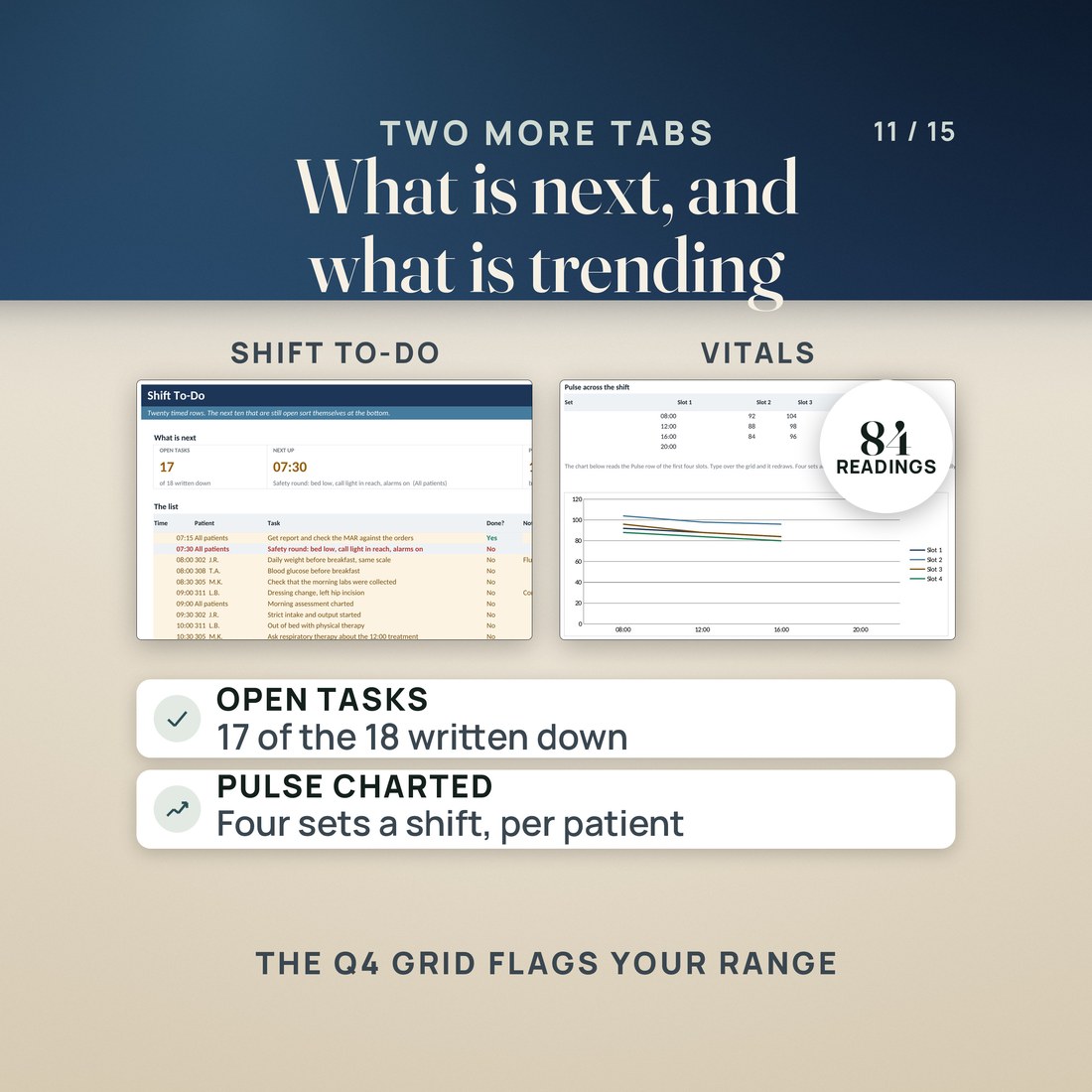
One row per medication with the first dose time and the frequency, and NEXT MED DUE answers. Shift To-Do sorts the next ten undone tasks, Vitals flags anything outside your own thresholds, and SBAR Builder assembles the handoff.
Why It's Different
Not another template
This lane sells a PDF of a hand-drawn sheet, usually one unit, usually one layout, usually Letter only, and usually a flat page you print and write on. This is 156 sheets that cover seven units at five patient counts in two print styles and two paper sizes, every one of them a real fillable form rather than a picture of one, with 25,092 form fields and 1,516 check boxes between them. The row heights were measured rather than eyeballed, because a four patient sheet you cannot write on at speed is not a four patient sheet. And it ships the half nobody else does: a workbook that does the shift arithmetic, so the question of what is due next stops being something you keep in your head between rounds.
Delivery & Compatibility
Instant, and it opens in what you already use
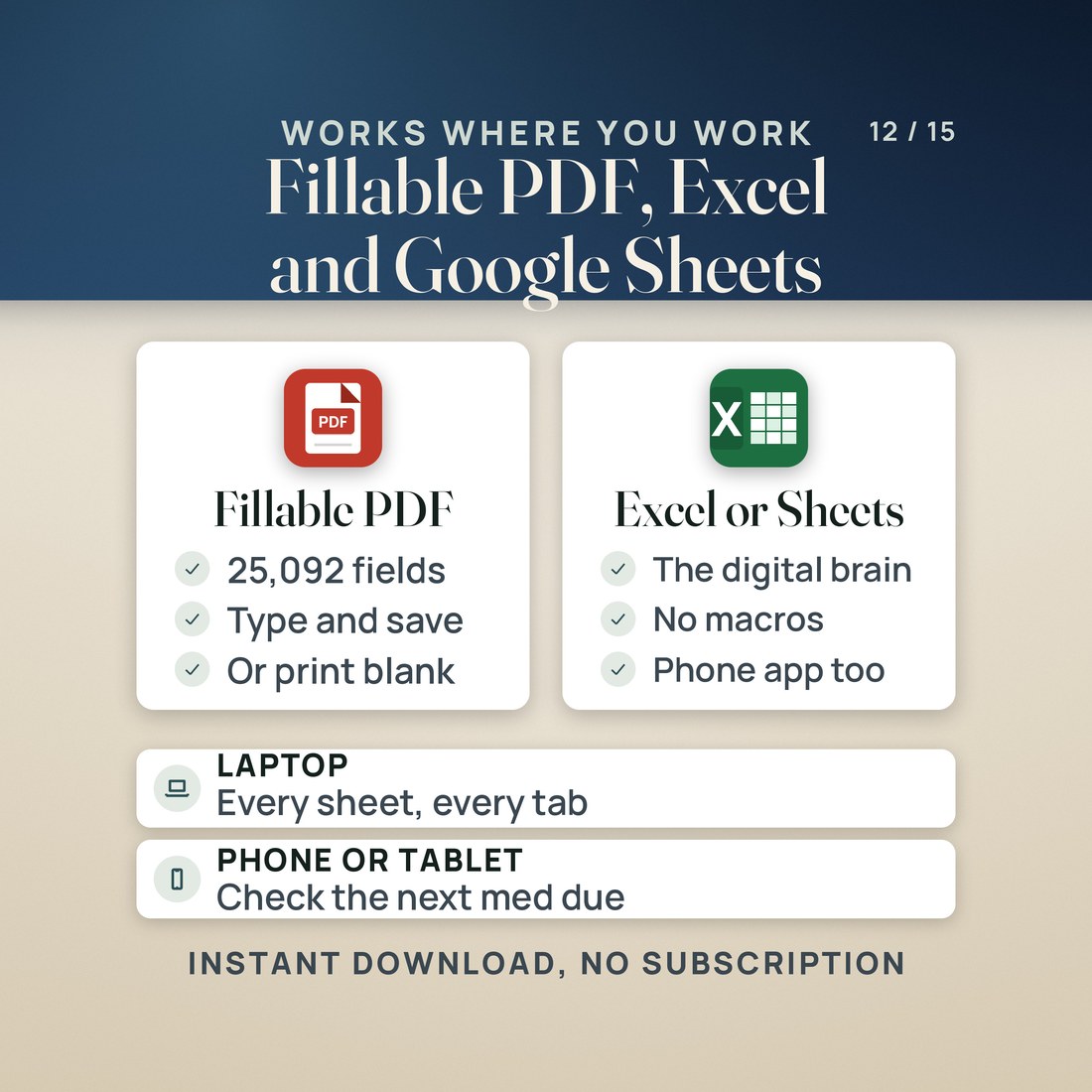
As soon as your order is complete you get instant access to download the ZIP: 156 fillable sheets in Letter and A4, the Nurse Digital Brain workbook in four color editions, a two page Quick-Start PDF and a START-HERE file. Nothing ships and nothing installs.
One ZIP, instant download. The sheets open in any PDF reader on a computer, tablet or phone; if a browser preview will not let you type into a field, or loses what you typed when you close it, open that PDF in Adobe Acrobat Reader, in Preview on a Mac or in Edge instead, and remember that typing is saved only when you save the file. The workbook is built for Excel 2016 or later and works in Google Sheets. No macros, no account and no subscription, and there is no Canva file and no Word file.
FAQ
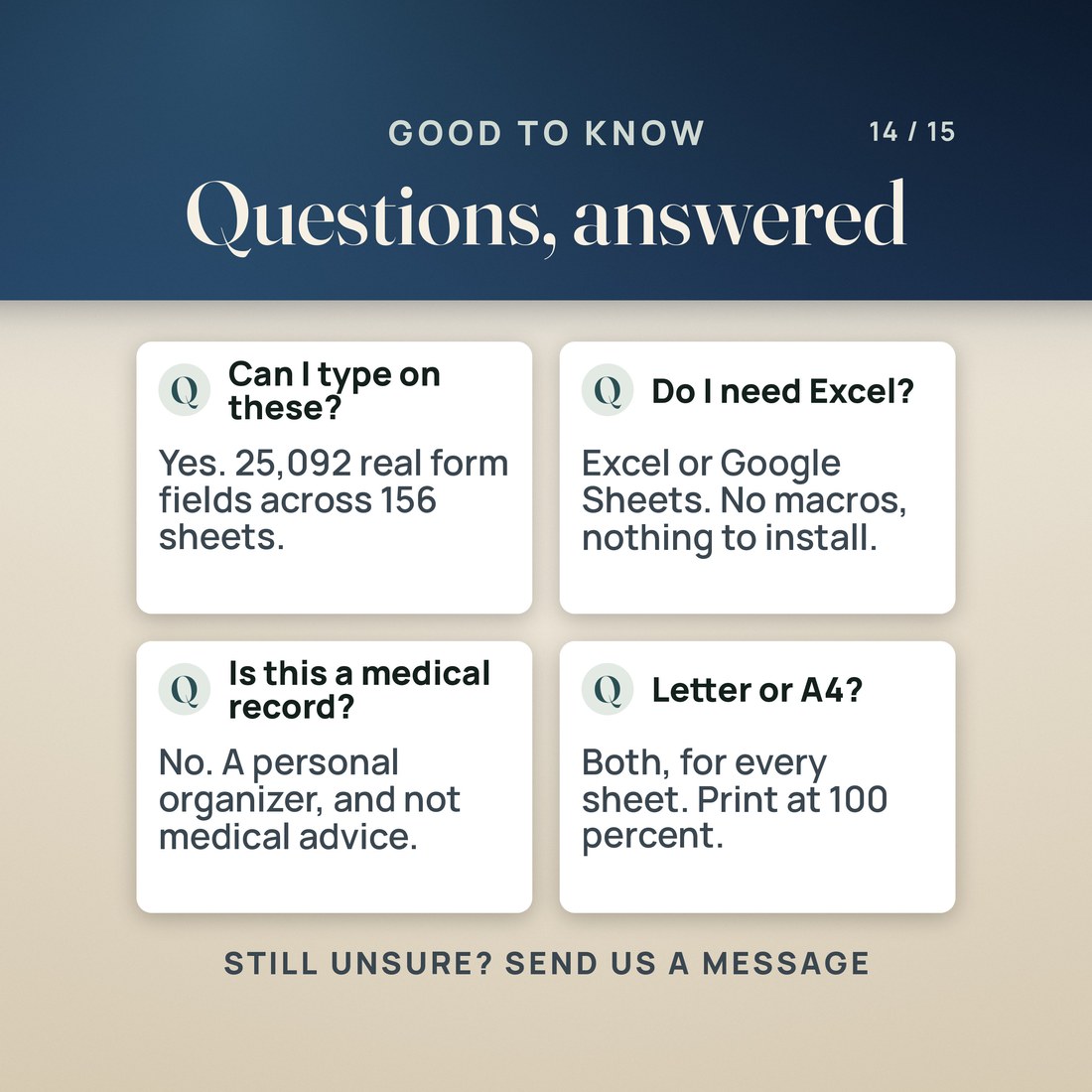
Questions, answered
What format is this?
156 fillable PDF sheets, which is 39 sheet designs drawn once in Color and once in Ink-Saver and set for both US Letter and A4, plus one workbook (.xlsx) in four color editions. You get a ZIP to download the moment payment clears. There is no Canva file and no Word file.
What do I need to open it?
Any PDF reader for the sheets, and Excel or Google Sheets for the workbook, on a computer, tablet or phone. There are no macros and nothing to install. If a browser preview will not let you type into a field, open that PDF in Adobe Acrobat Reader, in Preview on a Mac or in Edge instead.
What does the workbook compute?
Every dose time on a med row from the first dose time and the frequency, how many of those doses fall inside your shift, how many are still to come, how many are due in the next hour, and which med in which room is next. Also the hours into the shift for any time you type, a twelve hour shift clock with the doses in each hour, the next ten undone tasks in time order, a check flag on any vital sign outside the thresholds you typed, and four finished SBAR paragraphs.
Are the sheets really typeable, or are they just pictures?
They are real fillable PDFs. Every box is a form field and every check box is a real check box, 25,092 fields and 1,516 boxes across the 156 sheets. Typed answers are saved when you save the file.
How should I print them?
At 100 percent, or Actual Size. Do not let the printer scale to fit: that is what shrinks the handwriting rows below the height the layout was measured at. Ink-Saver is the same sheet in black at hairline weight for a shared printer.
Is any of this medical advice?
No. Nothing here checks a dose, a route, an allergy or an interaction, and nothing here is a medication administration record or a medical record. The sheets give you boxes to write in, and the workbook does arithmetic on the times you type. Your orders, your facility's MAR and policy, and your own judgment come first, every time.
These sheets and this workbook are for a nurse's own organization during a shift. They are not medical advice, and they are not a legal record or a medical record. No patient information is stored in any of these files, there is no account and nothing is sent anywhere; if you type real patient information into your copy, that copy is protected health information from that moment on, and anything you write on paper is handled and destroyed under your own facility's policy. BID is spaced as every twelve hours and TID as every eight, so use q4h, q6h, q8h or q12h when you need the exact spacing your facility uses. The workbook holds six patient slots, 24 med rows and 20 to-do rows. The vitals low and high numbers are yours to type, and the flag is a typing check rather than a clinical one. The four color editions are separate files. Sam Delgado is not a real nurse and J.R., M.K., T.A. and L.B. are not real people: no real patient information was used anywhere in this product. Digital product; because the files are delivered instantly, all sales are final.